-

arrow left
arrow left

Virtual Tours for Hotels: Turning Exploration into Direct Bookings

  • Web experiences
  • 360° Photography

Discover how a custom hotel virtual tour can reduce booking uncertainty, showcase rooms and event spaces, and connect property exploration with direct revenue.

Virtual Tours for Hotels: Turning Exploration into Direct Bookings
Summarize this insight with:
The decision a hotel marketer never sees

Why guests book the property next door

A guest opens your website. They scroll the gallery, read the room description, glance at the price, and close the tab. Two minutes later, they book the chain across the road. They never told you why. The truthful answer, most of the time, is the one no analytics dashboard surfaces: they could not picture themselves inside your property, and they could picture themselves inside the other one.

For two decades, hospitality marketing has tried to solve this with sharper photography, longer descriptions, and more video. Each iteration helps a little. None of them solve the underlying problem, which is that a static image asks the guest to imagine, and most guests are not willing to do that work for a property they have not yet committed to. A virtual tour does the imagining for them.

This article is a clear-eyed look at what a virtual tour for hotels actually moves, what it does not fix, and how to tell a serious tour apart from a cheap one. There is real data. There is also an honest counterweight, because every commercial argument for hospitality virtual tours sounds the same after a while, and you have probably heard most of them.

Network-scale data, a decade of measurement

What a virtual tour actually moves

The most reliable performance data on hospitality virtual tours comes from networks large enough to filter out noise. Across all 28 Center Parcs parks in Europe, a virtual tour ecosystem Poppr has built and maintained since 2015, the measured shifts are unusually clean.

Average session duration moved from 3 minutes 49 seconds to 14 minutes 37 seconds, an increase of 311 percent. Conversion rate moved from 0.81 percent to 1.27 percent, an increase of 56.8 percent. Average booking value rose 34.8 percent, as guests who had explored the experience were more likely to upgrade to premium cottages or add spa packages. Pages per session moved from 4.27 to 12.55, an increase of 194 percent.

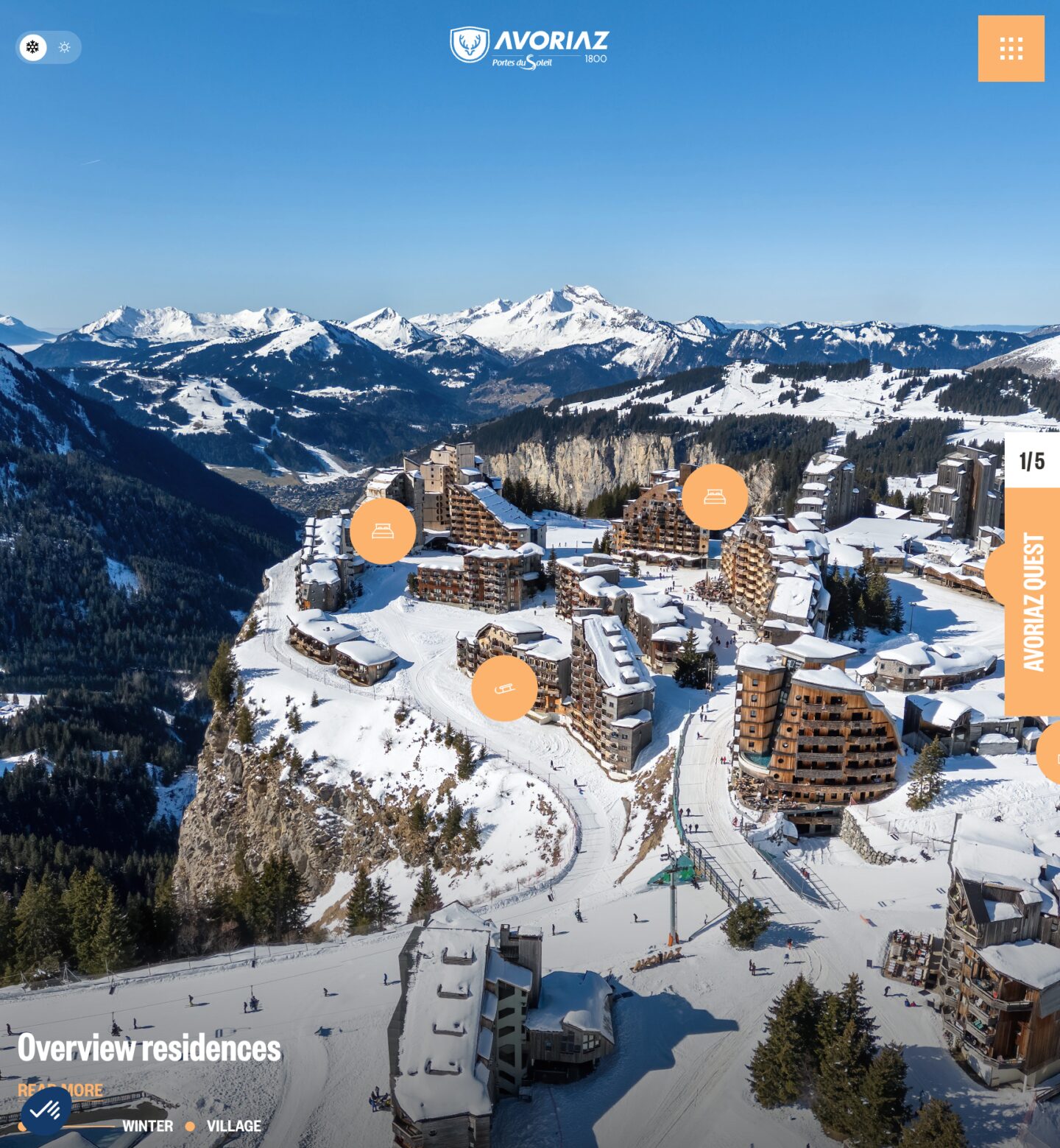
These are network-scale numbers. A 30-room independent hotel will not match them on absolute volume. But the directional shifts of longer sessions, higher conversion, and higher average booking value are consistent across smaller properties too. Avoriaz, the car-free ski resort in the French Alps, ran a campaign called the Avoriaz Quest inside its virtual tour and brought in 43,000 new visitors and 7,000 email sign-ups against an internal target of 1,000. Session time more than doubled.

What the data shows is straightforward. When guests can move through a property at their own pace, see the actual scale of a room, and understand the layout before booking, they stay longer, commit faster, and pay more. The mechanism is not aesthetic, it is informational. Doubt is what holds bookings back, and a serious virtual tour removes doubt.

Explore Poppr virtual tours Explore Poppr virtual tours
The honest counterweight every buyer deserves

What a virtual tour does not fix

Five things a virtual tour cannot fix

  • A broken booking engine. If your property page converts at 0.4 percent, and your booking funnel loses half of those guests at the room-selection step, a tour will not recover them. It will surface the problem more clearly because session times will rise without converting, but it will not solve it.
  • OTA dependency at the contract level. If your distribution mix is structurally tilted toward Booking.com because of inventory or rate parity clauses, a tour increases your direct conversion percentage but does not reduce the OTA share. That is a commercial-team problem, not a marketing one.
  • Weak room descriptions. The two work in tandem. Strong descriptions answer the questions a guest types, the tour answers the questions they cannot articulate. If the descriptions are thin, the tour cannot rescue them.
  • A property that is structurally not competitive. If your three-star is priced like a four-star and your competitors are not, no amount of immersive content will close that gap.
  • Slow page-load times or weak mobile UX. If anything, a virtual tour raises the stakes on both, because immersive content needs to load cleanly or it actively damages the impression of the property.
The buyer-behaviour shift that has happened

From browser to booker

Even setting aside the data, buyer behaviour has already moved. International travellers, younger travellers, and accessibility-sensitive travellers all expect to explore a property before they commit. The reasons differ, but the expectation is the same.

International guests face a higher decision barrier than domestic ones. The journey is longer, the cost is greater, and the consequences of a wrong choice feel heavier. A virtual tour reduces that friction by replacing imagined ambiguity with seen specifics.

Younger travellers, particularly Gen Z and millennials at the higher end of that band, treat digital transparency as a baseline. A property that does not let them explore signals that it is hiding something, even when it is not. A property that does signals competence and credibility, again even before any guest has spoken to the front desk.

Accessibility-sensitive travellers, including guests with mobility constraints, sensory sensitivities, or anxiety in unfamiliar environments, gain disproportionate value from being able to map a property before arriving. This is an underserved audience and a meaningful one. Properties that take it seriously consistently outperform on guest sentiment.

The question is not whether your guests want this. They are already getting it from someone. The question is whether they are getting it from your property or from the property next door.

Doubt is what holds bookings back. A serious virtual tour removes that doubt.
Steven
Founder, Poppr
Virtual Tours for Hotels & Hospitality

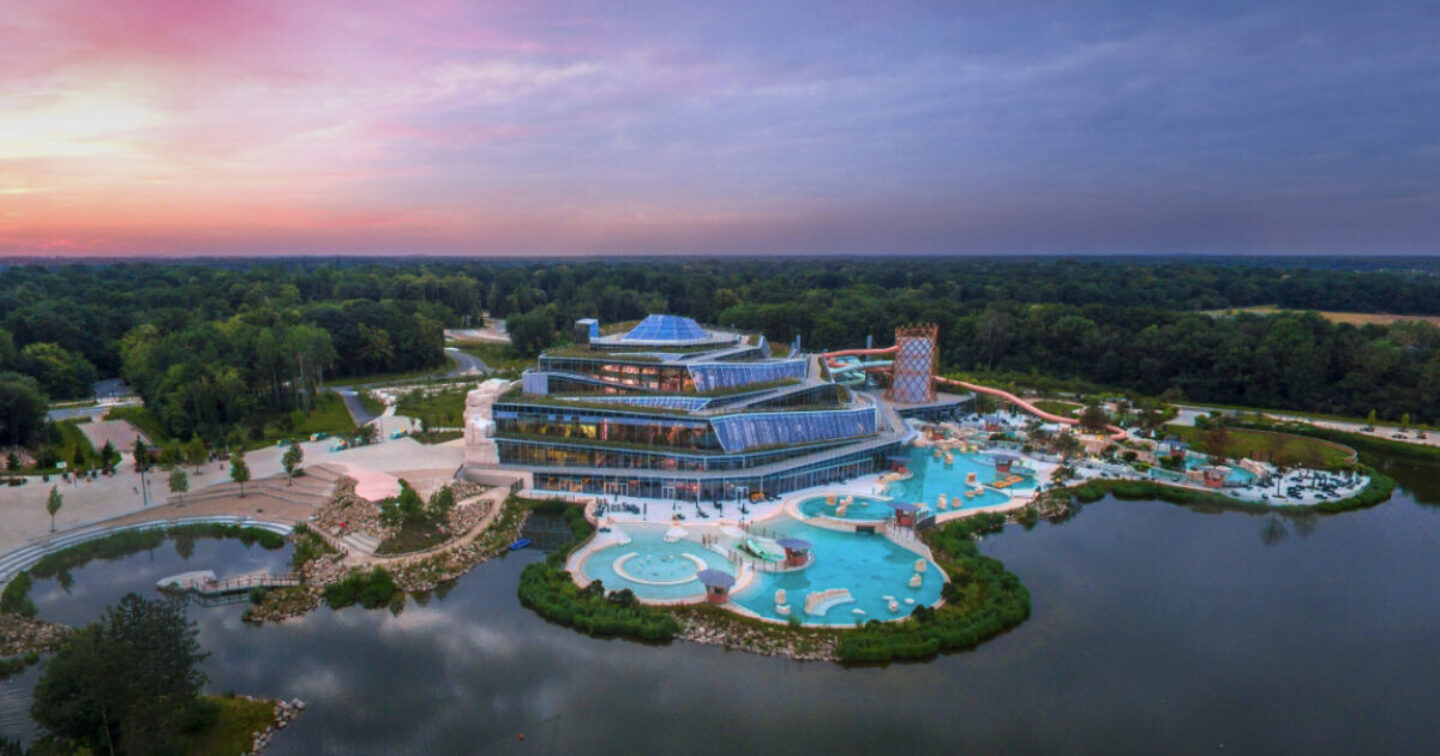
A Center Parcs cottage, captured at 200 megapixels for the network of 28 parks across Europe.

Virtual Tours for Hotels & Hospitality

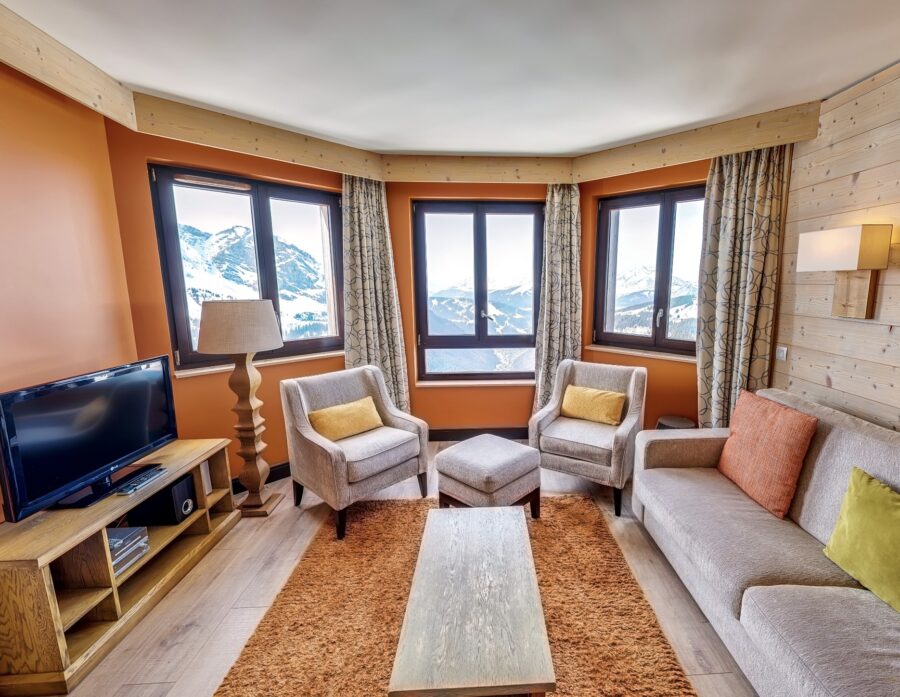
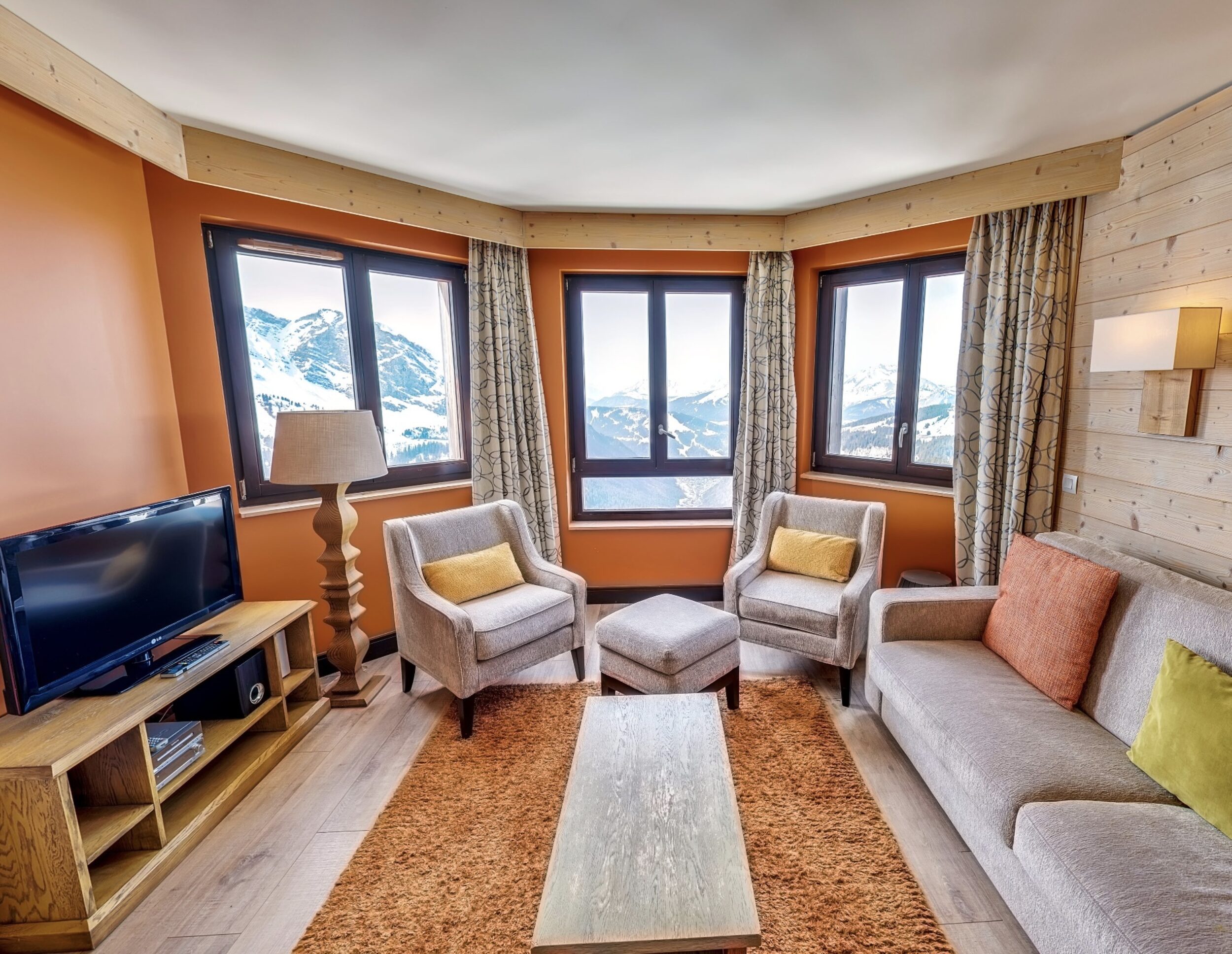
Avoriaz, the silver-medal Worldwide Epson Pano Awards tour at the car-free ski resort in the French Alps.

Five buyer-protection checks before you commission

What separates a serious tour from a cheap one

What to ask any vendor before you sign

  • Resolution. Cheap tours run at roughly 4K equivalent. Serious tours run at 200 megapixels (20,000 by 10,000 pixels). At that resolution, a single image can be printed 17 metres wide without pixelation, which is not a hospitality requirement but is a useful proxy for image quality at viewing scale. Lower resolutions look soft on a phone screen, and softness reads as cheapness, which the guest projects onto the property.
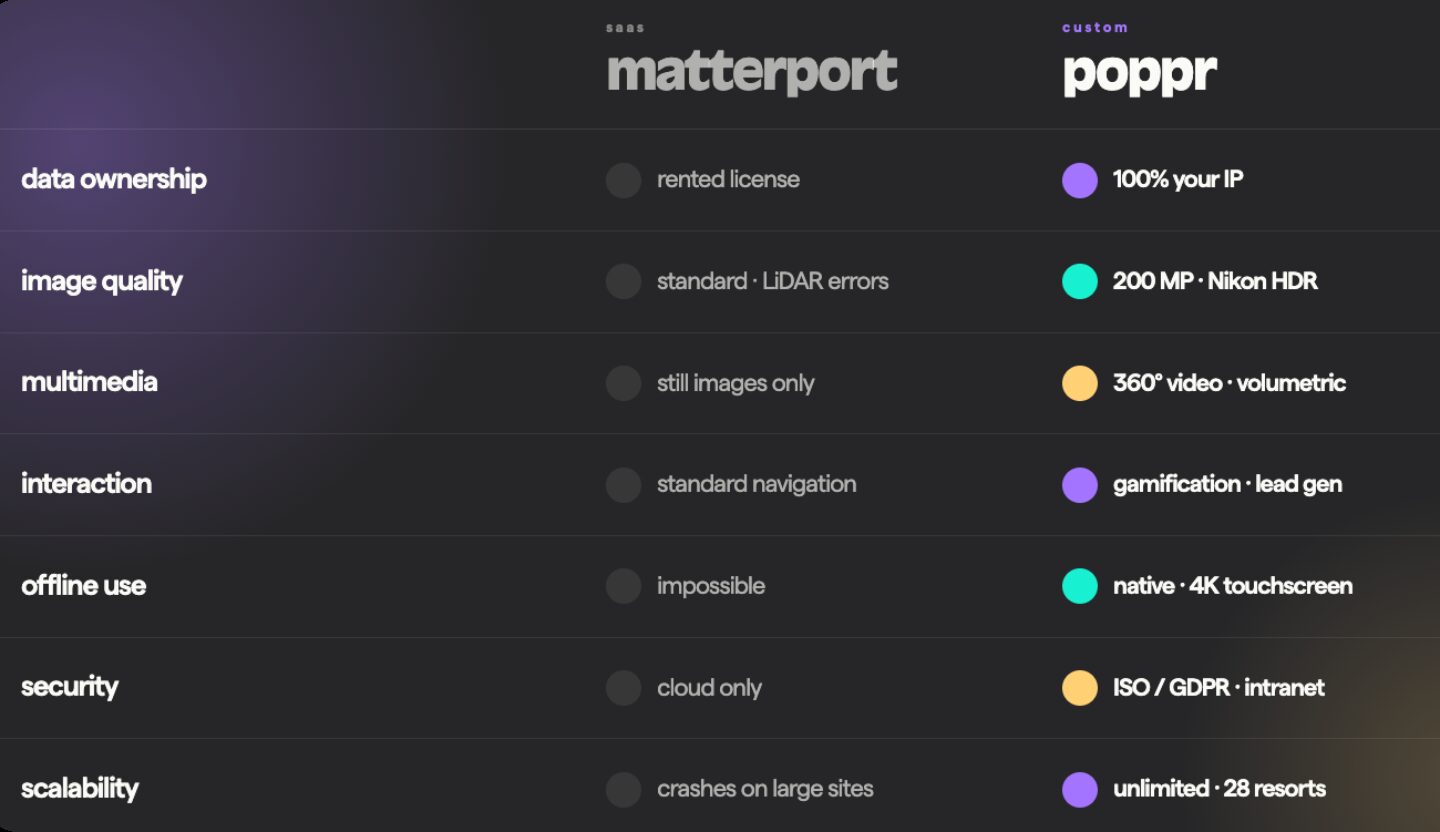
  • Hosting and ownership. Cheap tours are usually rented from a SaaS platform. The files live on the platform’s servers, and if the subscription lapses, the asset disappears. Serious tours are owned, self-hosted or hosted on the property’s own infrastructure, and remain accessible regardless of vendor relationships.
  • Updates. A cheap tour requires a full reshoot when a room is refurbished. A serious tour is modular, so a single space can be reshot and slotted in without touching the rest of the property.
  • Lifespan. A cheap tour begins to look dated within two to three years. A serious tour is designed for fifteen to twenty. Poppr’s first Center Parcs tour, shot in 2015 at Le Bois-aux-Daims in France, is still active and visually indistinguishable from work delivered this year. Longevity is a function of resolution, design discipline, and modular architecture.
  • Integration with the booking flow. A cheap tour sits as a separate page, often inside an iframe. A serious tour is wired into the booking module, surfaces analytics on which rooms drive conversion, and links directly to the room reservation step from inside the experience.
Read the complete buyer’s guide Read the complete buyer’s guide
Matterport vs custom, the short version

When a SaaS tour is fine and when it is not

This section is short on purpose, because the deeper comparison is its own piece. SaaS platforms like Matterport are built for fast, standardised capture. They work cleanly for residential real estate, single-listing rentals, and tours that need to be live in a week and forgotten in two years.

For hotels, the calculus is different. A 30-room independent that needs the tour for the next decade and wants control over its own marketing asset is usually better served by a custom solution. A multi-property hotel group is almost always better served by a custom solution, because SaaS platforms struggle with consistency at scale. The 28-park Center Parcs network would not work as a Matterport project at all.

If you are weighing the two seriously, our Matterport vs custom comparison piece goes into the trade-offs, the data-ownership questions, and the long-run cost-of-ownership maths in detail.

Virtual Tours for Hotels & Hospitality

SaaS works for residential single-listings. Custom is the right call for hospitality assets meant to last fifteen to twenty years.

Most hotels do not need to commission an entire property at once. Start with the signature space, the one a returning guest tells their friends about.
Steven
Founder, Poppr

FAQ

How much does a virtual tour for a hotel cost? close filter

A serious custom virtual tour ranges from a few thousand euros for a single signature space to mid five figures for a full property. SaaS-platform tours start lower but carry recurring fees and shorter useful lives. The right comparison is total cost of ownership over the asset’s lifespan: five to ten years for SaaS, fifteen to twenty for custom.

How long does it take to produce a virtual tour for a hotel? close filter

A single-space tour takes two to four weeks from briefing to live, depending on shoot scheduling and approval rounds. A full hotel property typically takes six to twelve weeks. Multi-property hotel groups roll out per location and usually plan the whole network across a year or more.

Will a virtual tour reduce my OTA dependency? close filter

A virtual tour increases your direct-channel conversion rate, which over time shifts the mix toward direct bookings if your distribution contracts allow it. It does not unilaterally reduce OTA dependency where rate parity clauses or inventory commitments lock the share in. The tour is a marketing instrument, not a contractual one.

Can I update my virtual tour when I refurbish a room? close filter

With a modular custom tour, yes. A single space can be reshot and replaced without touching the rest of the property, usually within one to two weeks. SaaS platforms generally require a full reshoot of the affected scene and sometimes the surrounding ones, depending on how the tour was originally captured.

Does a virtual tour help with international guest bookings specifically? close filter

Yes, and disproportionately. International guests face higher decision barriers than domestic ones, and a virtual tour reduces the perceived risk of an unfamiliar property in an unfamiliar destination. Multilingual integration of audio guides and on-screen labels amplifies the effect for non-English-speaking markets.

What resolution do I actually need? close filter

A practical floor is 8K equivalent for a tour that holds up on modern phones and tablets without looking soft. Serious work runs at 200 megapixels (20,000 by 10,000 pixels). The difference is most visible on tablet and large-screen viewing, which is also where booking decisions tend to happen.

A short conversation scopes the right next step

Talk to the Poppr team

If you are weighing whether a virtual tour is the right next step for your property, a short conversation with the Poppr team is usually enough to tell whether it is, and what scope makes sense. We work with single-property independents, mid-size hotel groups, and continental hospitality networks. The starting question is always the same: what does your guest want to see before they book.

Discuss your hotel project Discuss your hotel project