A serious custom virtual tour ranges from a few thousand euros for a single signature space to mid five figures for a full property. When comparing proposals, consider the quoted production scope, recurring hosting or licence fees, update costs and access to content. Compare the total cost over the period you expect to use the tour.
Virtual Tours for Hotels: Turning Exploration into Direct Bookings
- Immersive Websites
- Virtual Tours
Discover how a custom hotel virtual tour can reduce booking uncertainty, showcase rooms and event spaces, and connect property exploration with direct revenue.
Help guests understand your hotel before booking
A guest can leave a hotel website with practical questions unanswered: how rooms connect, what facilities look like or whether the property suits their stay. A virtual tour can help answer those questions by showing the spaces in context.
Guests can explore room layouts, shared areas and event spaces at their own pace. Photography, written descriptions and video still have a role: each format helps explain a different part of the experience.
This guide looks at what hotel virtual tours can support, how to interpret published project results and what to compare when choosing a production approach.
What published project results can tell you
Poppr’s published Center Parcs programme article reports a 56.8% higher conversion rate and a 34.8% higher average booking value. These are historical figures reported for that programme. They are not a separate measurement for an individual hotel or a guarantee of future results.
A virtual tour can help guests inspect room layouts and facilities before booking. To assess its commercial effect for your property, define the visitor actions and booking routes you want to measure. Interpret the results alongside factors such as traffic sources, availability, pricing and changes to the booking process.
What to address alongside a virtual tour
Five things a virtual tour cannot fix
- Booking friction. A tour does not replace a clear, working booking process. Review room selection, availability and checkout alongside the experience, so interested guests can find the next step.
- Distribution strategy. A virtual tour can support a hotel’s own website, but it does not by itself determine the balance between direct and third-party bookings. Room availability, pricing, marketing and the booking process also shape that balance.
- Room information. Pair the tour with clear descriptions of room types, facilities and practical details. Use each format to answer questions the other may leave open.
- The overall offer. A virtual tour helps present the property. Guests still need to consider its location, facilities, availability and price when deciding whether it suits their stay.
- Website performance. Check that the tour loads and can be navigated on the devices your guests use. Review it alongside the performance and usability of the rest of the website.
Help guests plan before they arrive
Guests planning from abroad or checking specific access needs may benefit from exploring a property remotely. Show the rooms, entrances, routes and shared facilities that matter to their stay.
For international audiences, consider clear navigation and relevant language options. Give guests a straightforward way to ask questions that the tour does not answer.
A virtual tour should complement accurate written accessibility information, dimensions and staff guidance. It can help someone understand a space, but it cannot establish whether every part of the property meets their individual requirements.
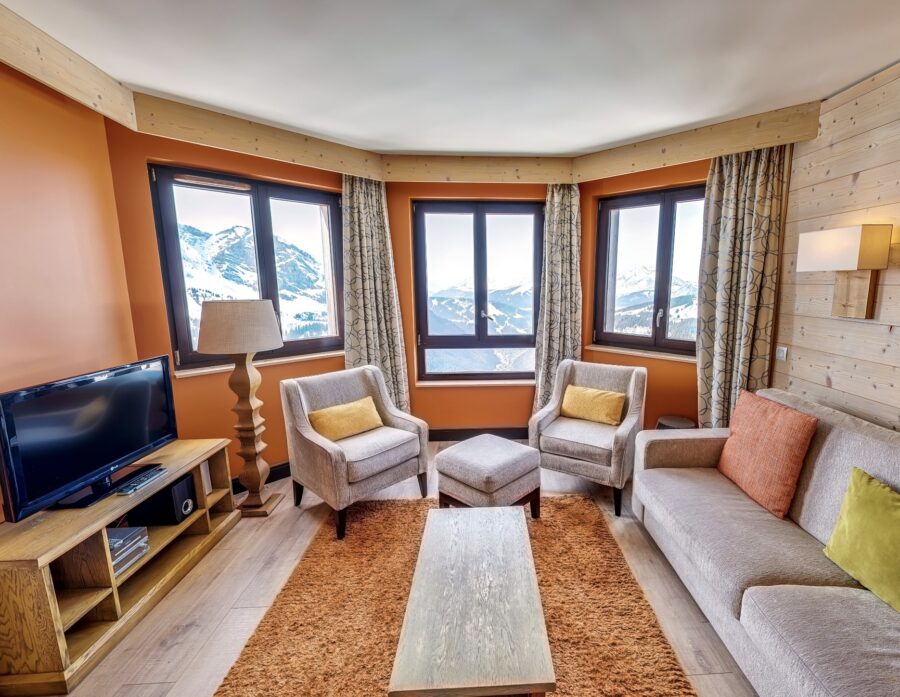
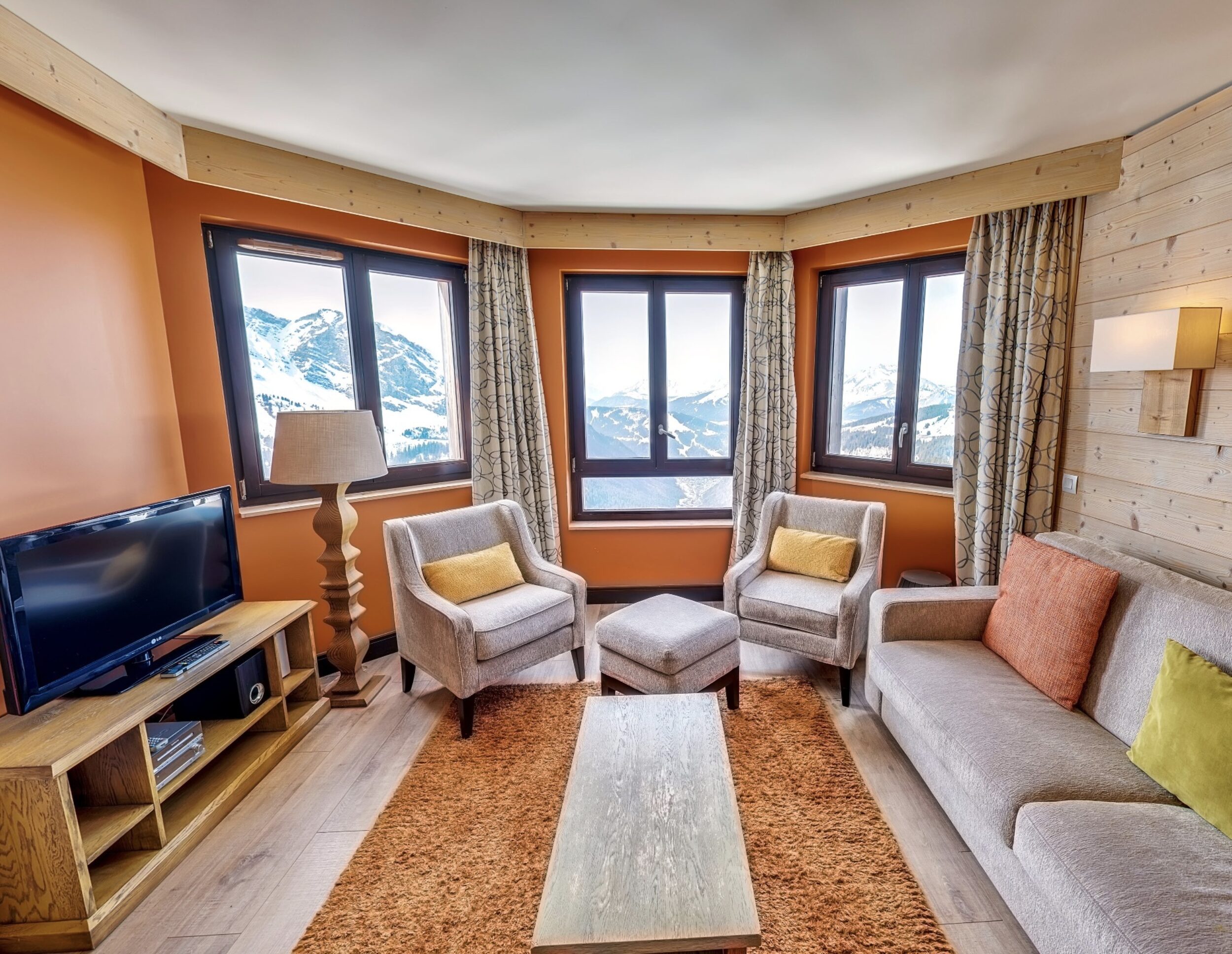
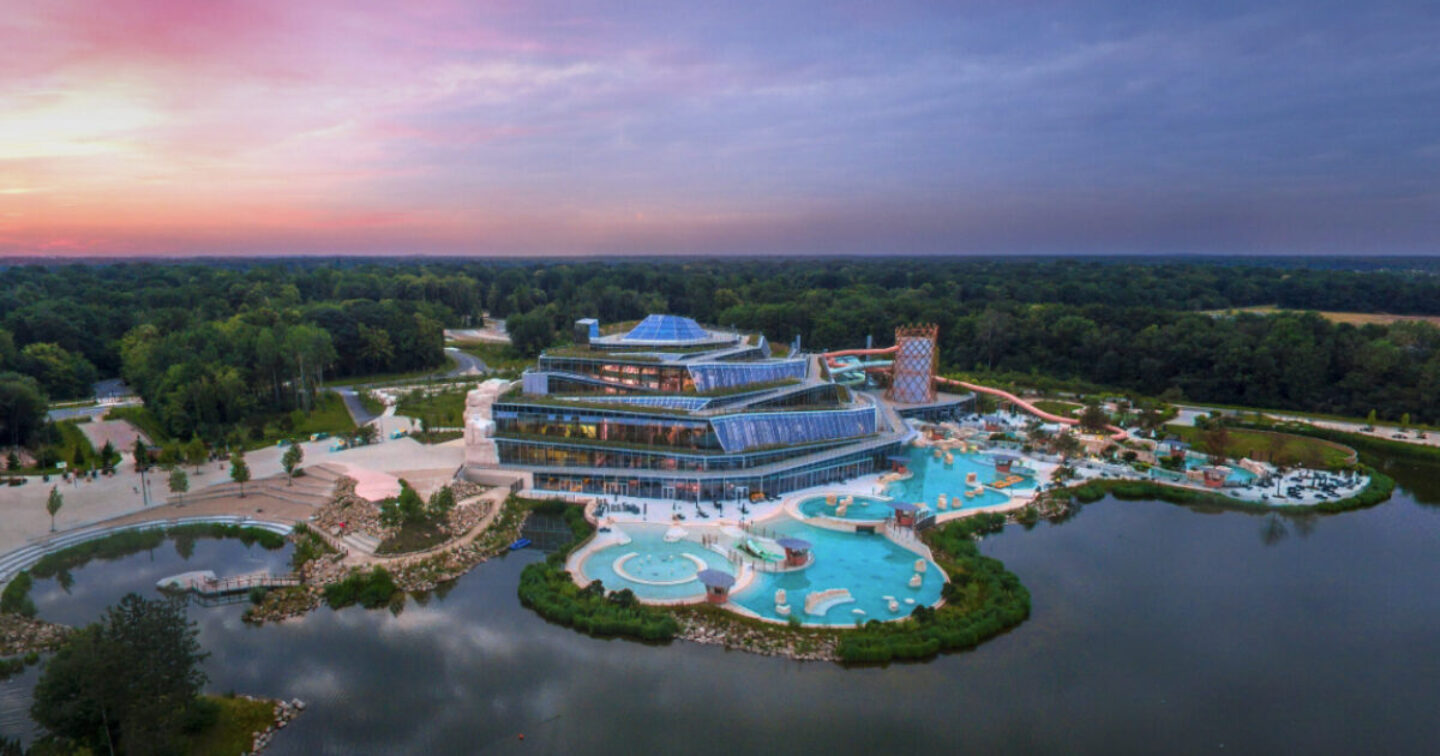
A Center Parcs cottage, captured at 200 megapixels for the network of 28 parks across Europe.
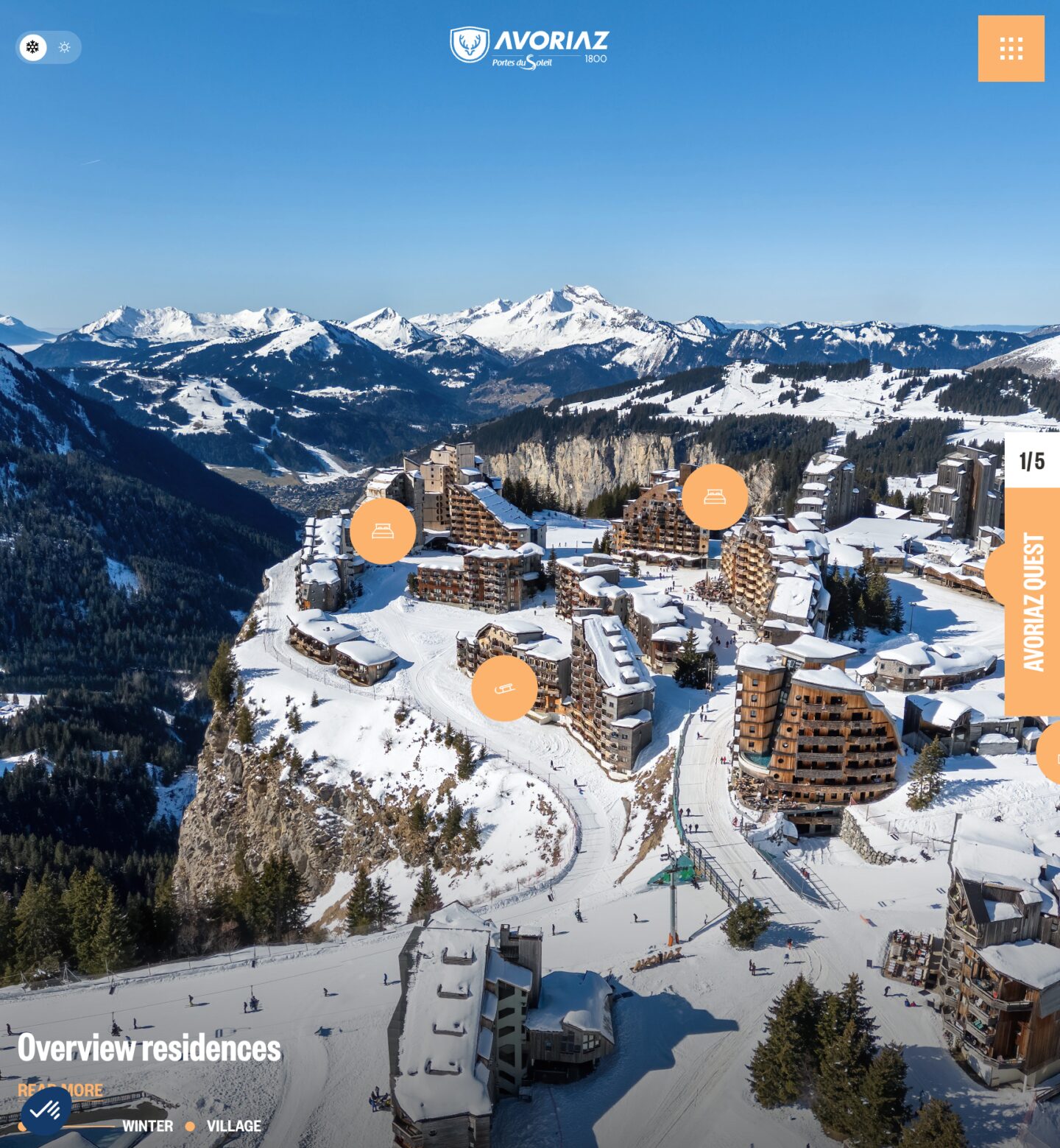
Avoriaz, the silver-medal Worldwide Epson Pano Awards tour at the car-free ski resort in the French Alps.
Five checks when comparing hotel virtual tours
What to ask a provider before you commission a tour
- Image quality and performance. Review representative rooms on the phones, tablets and larger screens your guests use. Check detail, colour, lighting and loading speed together; a resolution figure alone does not establish the quality of the finished experience.
- Hosting and access. Ask where the tour and source files will be hosted, which usage rights are included and what happens if the hosting or supplier arrangement ends. Record the agreed access and export options in the project terms.
- Updates. Ask how a refurbished room, changed route or new facility can be updated, whether surrounding content needs to change and what production and maintenance work is involved.
- Maintenance. Discuss how the tour will be kept accurate and compatible with its intended devices over time. A useful lifespan depends on the property, the content and the ongoing technical arrangements.
- Booking links and measurement. Define how guests move from the tour to relevant room or event enquiries, and which actions you need to measure. Check the proposed integration with your existing website and booking process.
Compare a hosted platform with a custom tour
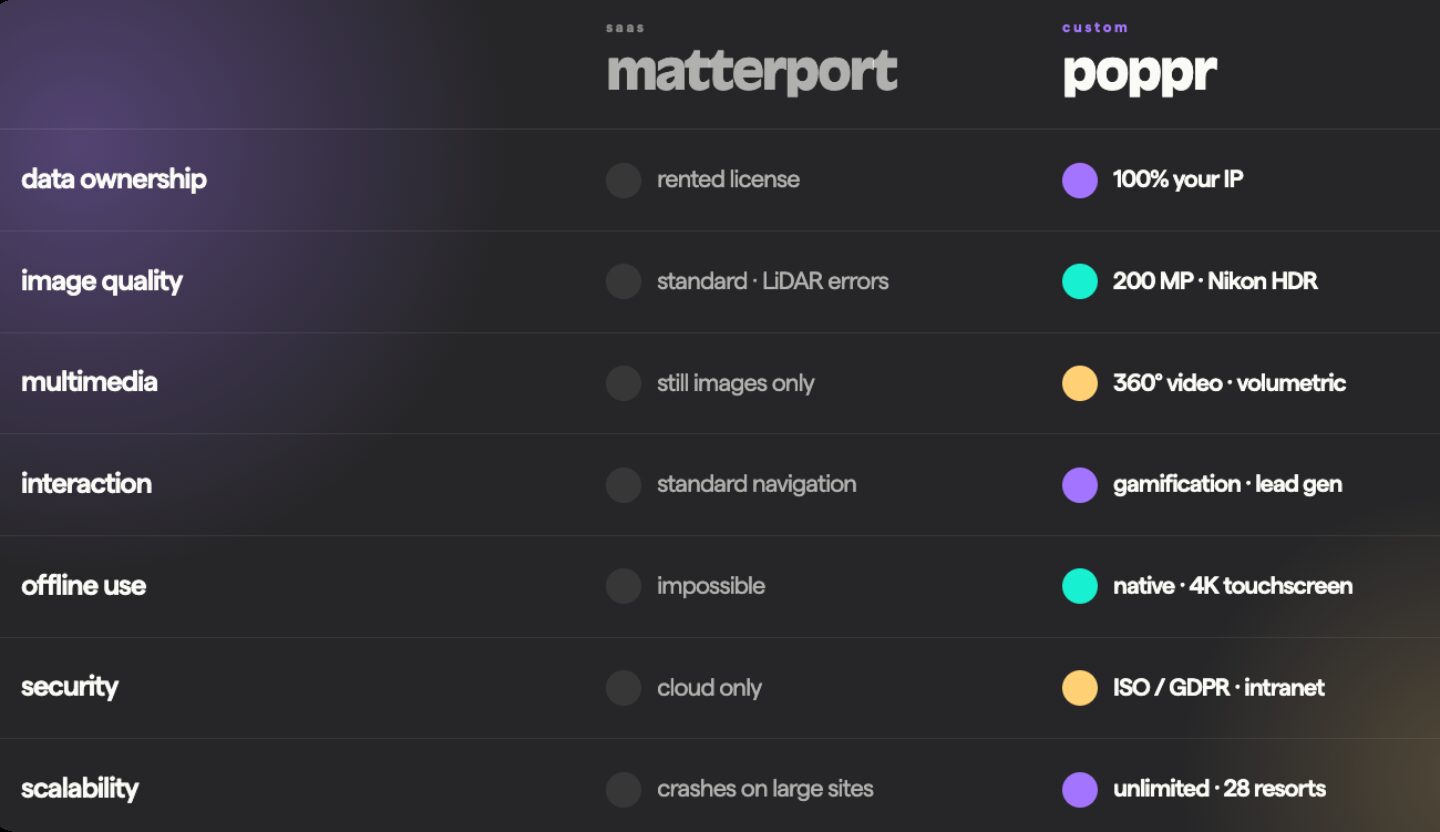
A hosted tour platform may suit a straightforward walkthrough with standard features. A custom approach becomes relevant when the project needs a particular brand experience, multi-site navigation, integrations, content workflows or measurement.
Compare both approaches against the same brief. Ask providers to demonstrate the required features and explain hosting, update workflows, access to content and ongoing costs. A hotel’s size alone does not settle the choice.
Our Matterport and custom virtual tour comparison discusses these trade-offs in more detail.
Compare hosted and custom approaches against your hotel’s content, integration, update and hosting requirements.
Explore the hotel and destination projects
Explore the Center Parcs virtual tours, the Avoriaz destination tour, the Méribel project for Hôtel de l’Adray Télébar and the Pierre & Vacances tours. They show different ways to present accommodation, facilities and their surroundings.
Compare the navigation, the spaces shown and the next steps offered to visitors. Published project results should be read in their own context, rather than treated as a forecast for another property.
For practical hotel applications, read ten ways virtual tours can support direct bookings. The Center Parcs programme overview describes the wider network.
FAQ
A single-space tour takes two to four weeks from briefing to live, depending on shoot scheduling and approval rounds. A full hotel property typically takes six to twelve weeks. Multi-property hotel groups roll out per location and usually plan the whole network across a year or more.
A virtual tour can support your direct booking website by helping guests explore the property and find the relevant booking route. It does not guarantee a change in your booking mix. Track the visitor actions and bookings associated with the experience, and assess them alongside your wider distribution and marketing activity.
With a modular custom tour, yes. A single space can be reshot and replaced without touching the rest of the property, usually within one to two weeks. SaaS platforms generally require a full reshoot of the affected scene and sometimes the surrounding ones, depending on how the tour was originally captured.
It can help guests explore an unfamiliar property before travelling. Clear room information, useful routes through the tour and appropriate language options can support that process. Any effect on international enquiries or bookings needs to be measured for your own audience.
Choose the image quality for the viewing experience and the details guests need to inspect. Review sample rooms on the intended devices and at the zoom levels the tour allows. Consider sharpness, stitching, lighting, retouching and loading speed together. A large source image is useful only when the published tour delivers it well.
Talk to the Poppr team
If you are weighing whether a virtual tour is the right next step for your property, a short conversation with the Poppr team is usually enough to tell whether it is, and what scope makes sense. We work with single-property independents, mid-size hotel groups, and continental hospitality networks. The starting question is always the same: what does your guest want to see before they book.