
The largest virtual tour in the world: how Center Parcs sets a new digital standard
- Web experiences
- 360° Photography
- 360° Video
How Center Parcs and Poppr built a scalable browser-native platform with 2,788 panoramas across 27 parks, driving +56.8% higher conversion and +34.8% higher booking value.
More than a record: this is commercial digital infrastructure
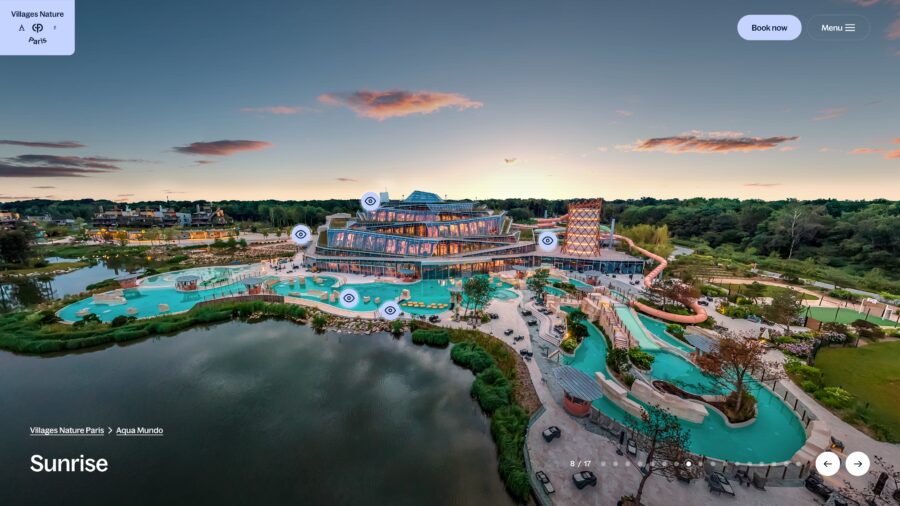
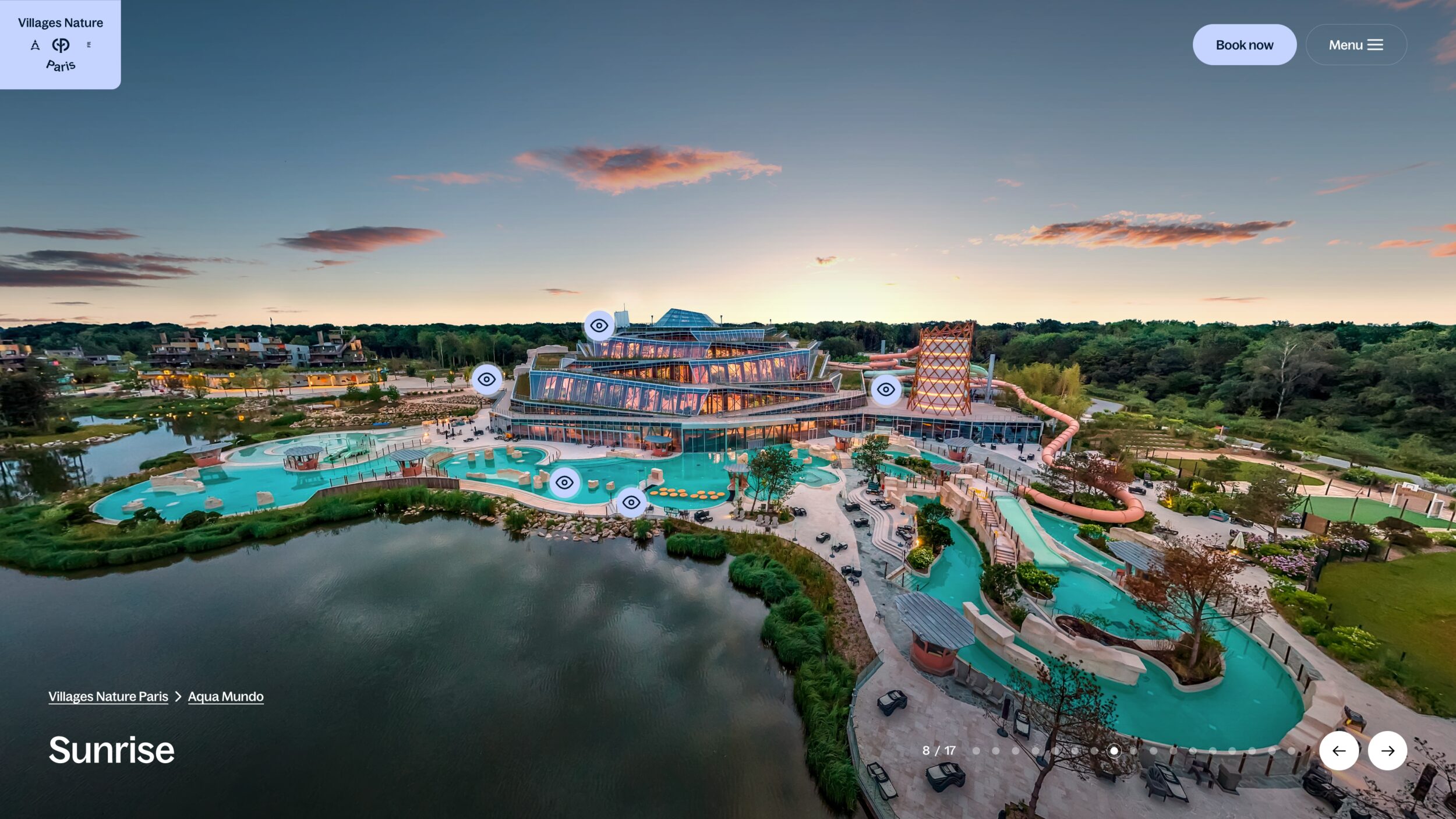
The term largest virtual tour in the world gets claimed quickly. Center Parcs and Poppr have the numbers to back it up: 2,788 panoramas, 27 parks, 5 countries, 17,500 cottages, and every publicly accessible square metre of every resort documented in interactive 360-degree photography.
This is not a marketing stunt. It is a functional platform that puts booking decisions in the hands of the visitor before they ever arrive.
From passive image to active control
How the platform is built
Photography shows you what the photographer chose. Video dictates the pace. A virtual tour hands control to the visitor. They navigate at their own speed, return to spaces that matter to them, and build a mental model of a place before committing to it financially.
For a product like a Center Parcs holiday, where the cottage type, the park setting, and the proximity to facilities all influence the decision, that control is commercially significant.
Impact on hospitality and property management
The platform delivers measurable results across the booking funnel:
- +56.8% higher conversion rate
- +34.8% higher average booking value
- +311% longer session duration
- +194% more pages per session
Visitors who explore the bathroom of a cottage before booking are less likely to be disappointed on arrival. That reduces complaints and return visits to customer service. The virtual tour does not just sell. It sets expectations accurately.
Built in Ghent, deployed across Europe
The platform runs entirely in the browser. No app download. No plugin. No headset. It is built on WebGL with tiled image streaming, which means 20,000-pixel resolution images load progressively without requiring the visitor to wait for a full file transfer.
The architecture is modular. New parks can be added without rebuilding the system. Content updates happen at asset level. The platform scales with the portfolio.
A new standard for digital travel experiences
Search engines and AI assistants are increasingly indexing structured spatial content. A virtual tour that is built with clean metadata, descriptive alt text, and structured data signals is findable in ways that a gallery of static images is not.
When a potential visitor searches for a specific cottage type at a specific park, the virtual tour can surface as a direct answer. That is a different kind of discoverability than a homepage ranking.
SEO and AI Indexation: Why Scale Matters Beyond Visual Impact
For hospitality operators, the virtual tour changes two things. First, it shifts the effort of answering repetitive pre-booking questions from staff to the platform itself. Second, it gives property management a tool for onboarding new staff and briefing maintenance teams without requiring physical walkthroughs.
Both outcomes reduce operational load. Neither requires additional investment once the platform is live.
Immersive Websites as Revenue Infrastructure
Dubai 360 is frequently cited as a reference point for large-scale virtual tours. It contains approximately 1,290 panoramas. The Center Parcs platform contains 2,788. The difference is not just numerical. Dubai 360 is a city-wide exploration tool. The Center Parcs platform is a booking-integrated commercial product built for e-commerce conversion.
Scale and purpose are different things. This platform combines both.
Hospitality Transformation Through Digital Transparency
The platform was conceived, built, and is maintained in Ghent. The technical infrastructure, the photography methodology, and the integration logic were all developed in-house at Poppr.
Center Parcs operates across the United Kingdom, the Netherlands, Belgium, France, and Germany. The platform has been deployed across all five markets from a single codebase. That is a European export built on Belgian engineering.
Bigger than Dubai 360, built for e-commerce
Travel research is moving earlier in the decision cycle. Visitors increasingly want to experience a destination virtually before committing to it physically. The virtual tour is not a substitute for the visit. It is the step that makes the visit more likely.
Platforms that offer this kind of pre-visit confidence will attract visitors who are further along in their decision-making and therefore more likely to convert. The virtual tour is infrastructure for the next phase of travel commerce.
The Future of Travel Booking: Virtual Before Physical
The Center Parcs virtual tour is the largest in the world by panorama count. It is integrated with a live booking engine. It delivers measurable improvements across conversion, booking value, and session behaviour. It is browser-native, scalable, and built for e-commerce.
It was built in Ghent and deployed across five European countries. It sets a new standard for what a virtual experience can do in a commercial hospitality context.
The Largest Virtual Tour in the World as a New Digital Standard
Persmap met high-resolution beeldmateriaal en B-roll: Download persmap
Experience the Largest Virtual Tour in the World
Press kit with high-resolution visuals and B-roll: Download press kit