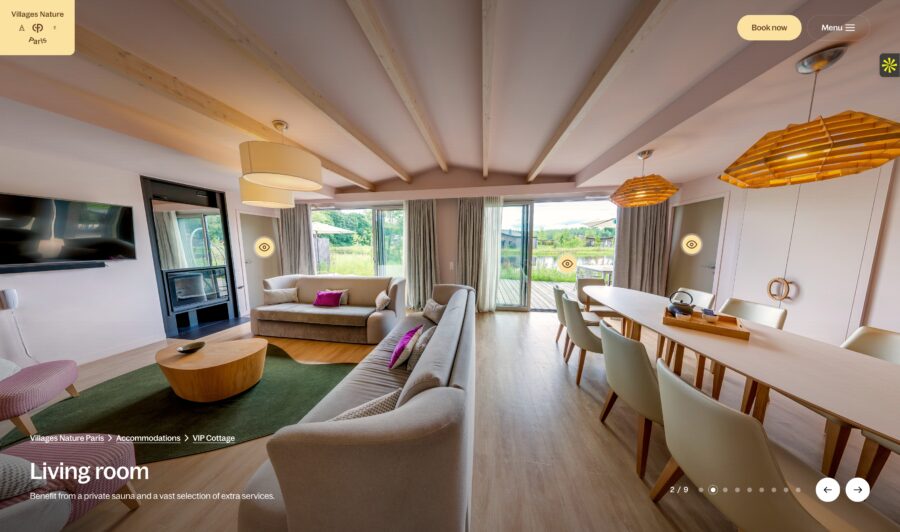
What is a virtual tour for a hotel?

A hotel virtual tour is an interactive 360° walkthrough of your property. Visitors navigate through rooms and spaces at their own pace, from any device, without downloading an app.

A hotel virtual tour helps you sell more rooms directly — without OTA commissions. Discover 10 proven ways virtual tours increase bookings, keep visitors on your website 4x longer, and boost average revenue per booking by 25%.
Most hotels are fighting for bookings on Booking.com — paying commissions of 15 to 25% on every reservation.
There's a better way.
Hotels that invest in a hotel virtual tour consistently drive more direct bookings through their own website. Visitors stay longer, trust the property more, and convert faster — all without paying a commission.
Here are 10 ways virtual tours help hotels sell more rooms, backed by real results from our projects across Europe.
A photo gallery is passive. A virtual tour is active.
Visitors decide for themselves where to look, which room to explore, and how long to spend in each space. That sense of control transforms a browsing session into something that feels like a real visit.
The result: visitors are far more emotionally invested in your hotel before they ever click "Book now."
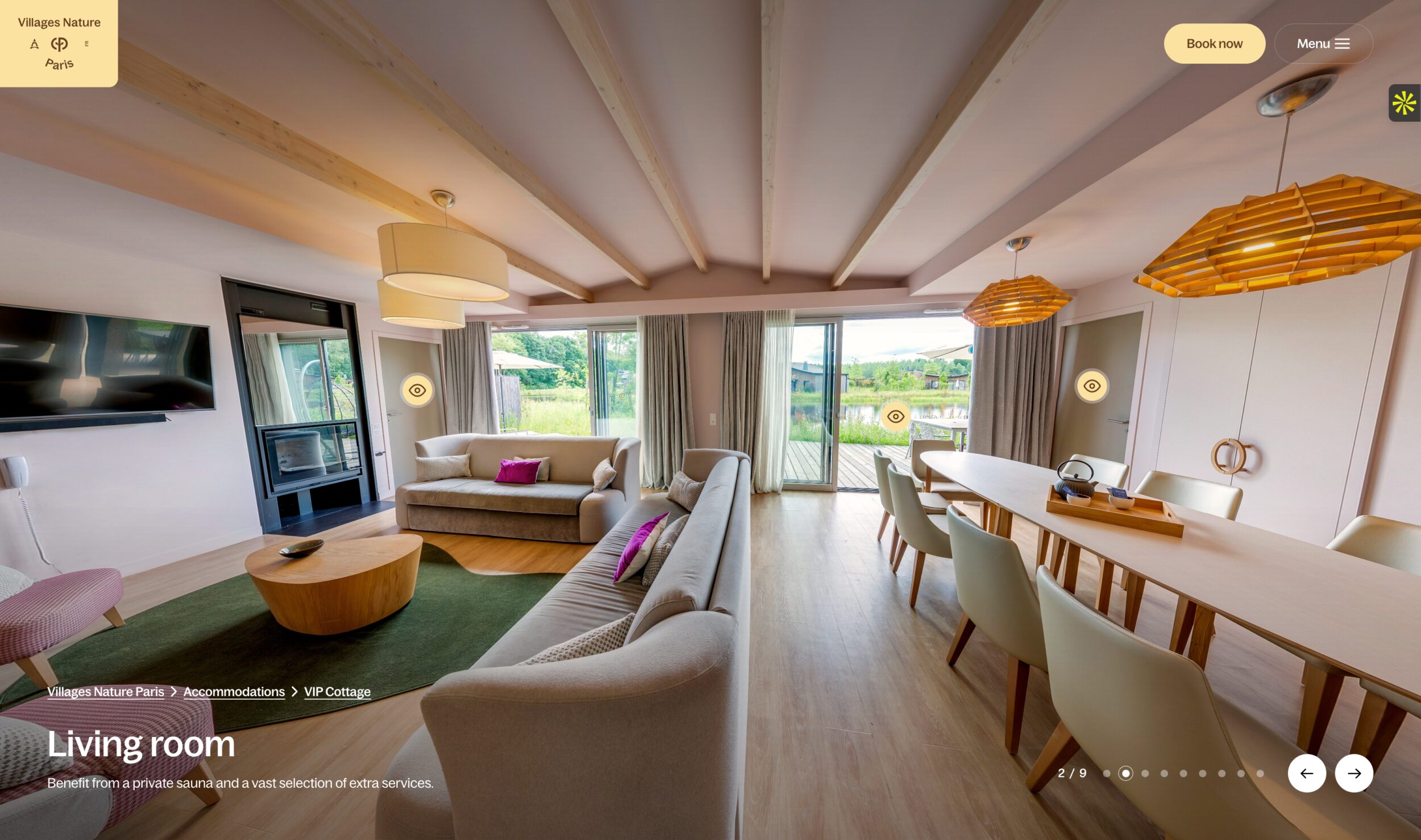
We built the virtual tour for all Center Parcs parks across Europe. Guests can explore every cabin type, the subtropical swimming pool, restaurants, and activities — all from home. The numbers speak for themselves.
The biggest obstacle to booking a hotel online isn't price — it's uncertainty.
Guests ask themselves: How big is the room really? What does the bathroom look like? Is the pool actually worth it?
A virtual tour answers every one of those questions before they're even asked. Guests can explore every corner of your property at their own pace, on any device.
When visitors can see everything, doubt disappears. And when doubt disappears, bookings follow.
The longer a visitor spends on your website, the more likely they are to book. That's not just intuition — it's backed by data.
After launching the virtual tour across Center Parcs, visitors spent 4x longer on the website compared to those browsing photos alone.
More time on site means more engagement with your rooms, facilities, and pricing. By the time they leave, they know your hotel better than any competitor's — and that's exactly where you want them when they decide to book.
Uncertainty slows decisions. Confidence speeds them up.
When visitors can explore every room, check the bathroom, and browse the facilities in full detail, the usual doubts are gone. There's nothing left to wonder about.
At Center Parcs, we tracked a 36% reduction in time-to-booking after the virtual tour launched. Fewer back-and-forth searches, fewer abandoned sessions, more completed bookings.
Here's a counterintuitive effect: when visitors explore a virtual tour, they almost always start with the best rooms.
They may ultimately book something cheaper — but their reference point has shifted upward. After seeing the suite, the standard room feels like a compromise.
The data confirms it. At Center Parcs, we saw a 25% increase in average revenue per booking after the virtual tour launched. Guests weren't just booking faster — they were spending more.
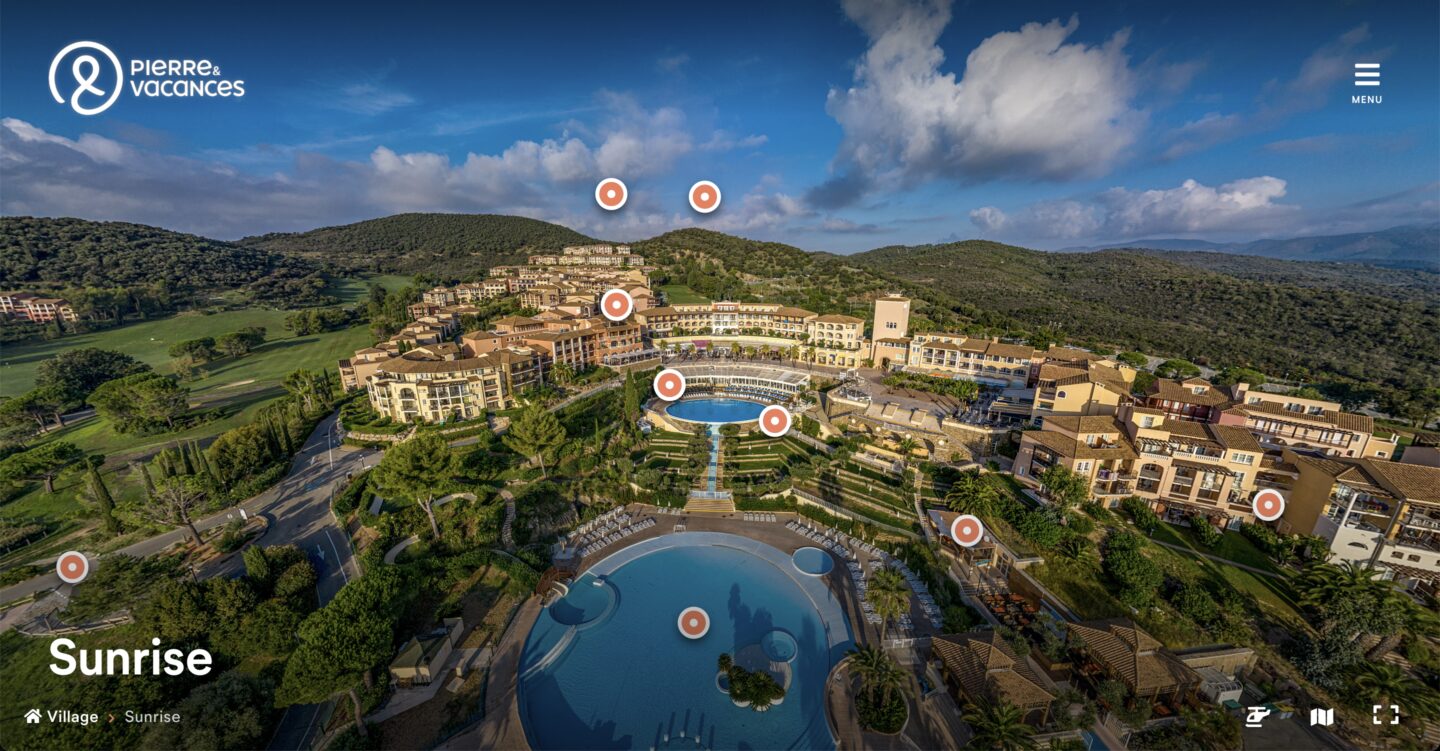
Resorts and holiday parks are a near-perfect match for virtual tours. There's simply too much to show in a standard photo gallery — and too much at stake if guests can't picture the full experience.
Guests want to discover the pool complex, the restaurants, the kids' club, the spa, and the different accommodation types — all before they book. A virtual tour lets them do exactly that.
We built the virtual tour for Avoriaz, a ski resort in the French Alps. The immersive experience of ski-in/ski-out access, the mountain landscape, and the resort atmosphere became powerful selling tools — none of which photos could capture on their own.
Here's something most hotels don't realise: Booking.com doesn't allow full virtual tours on their listings.
That makes a virtual tour exclusive to your own website — and it gives potential guests a compelling reason to book direct rather than through an OTA.
When visitors experience an immersive 360° tour on your website that they simply can't get anywhere else, the dynamic shifts. Your website becomes the better place to book — not just because of loyalty discounts, but because of genuine added value that no platform can replicate.
Virtual tours are one of the few marketing investments that genuinely improve with age.
Unlike paid ads — which stop working the moment you stop paying — or social content that disappears in feeds, a virtual tour keeps working for years. Most tours remain accurate and visually effective for 10 to 15 years.
That makes the cost-per-booking remarkably low over time. One investment. Permanent presence on your website. Ongoing impact on every visitor who finds your property — on Google, on social, or through direct referrals.
Google's algorithm rewards engagement — and virtual tours drive exactly that.
When visitors spend more time on your site, explore more pages, and interact with content, Google reads those as quality signals. That translates into a better search ranking and more organic traffic over time.
Virtual tours also dramatically reduce bounce rates. A guest who stays to explore a full 360° tour isn't clicking back to Booking.com. That's the kind of behaviour Google notices — and rewards with higher visibility in hotel search results.
A virtual tour doesn't just help visitors — it helps you understand them.
Modern virtual tour platforms include detailed analytics on how guests explore your property. You can see which rooms attract the most attention, where visitors spend the most time, and which areas they zoom in on.
Use that data to improve your room descriptions, refocus your photography, and prioritise which facilities to highlight in your ads. Every visit to your virtual tour becomes a source of actionable marketing insight.
The most successful hotel virtual tours cover every space that influences a booking decision:
The more completely you show your hotel, the more confident guests feel — and confidence converts.
These hotels and resorts are already using virtual tours to generate more direct bookings, all built by Poppr:
Each property saw measurable improvements in website engagement and booking performance after launching their virtual tour.
The cost of a hotel virtual tour depends on a few key factors: the size of the property, the number of rooms and spaces you want to show, and the production quality you're looking for.
Not sure what to budget? In a 20-minute video call, we can give you a clear, no-obligation price estimate based on your specific property and goals.
A hotel virtual tour is an interactive 360° walkthrough of your property. Visitors navigate through rooms and spaces at their own pace, from any device, without downloading an app.
Yes. Our projects consistently show improvements in time on site, conversion rate, and average booking value. The exact impact depends on the property and how the tour is promoted — but the direction is always the same.
Yes. All Poppr virtual tours are fully optimised for smartphone and tablet. Since most hotel visitors are browsing on mobile, this is non-negotiable for us.
Most virtual tours remain accurate and visually effective for 10 to 15 years. Unless you undergo major renovations, a virtual tour is a long-term asset, not a short-term campaign. Even if renovations happen, we can simply replace the 360° photos without having to do major changes to the rest of the virtual tour.