
Why Every Ski Resort Needs a Virtual Tour: The Avoriaz Story
- Immersive Websites
- Virtual Tours
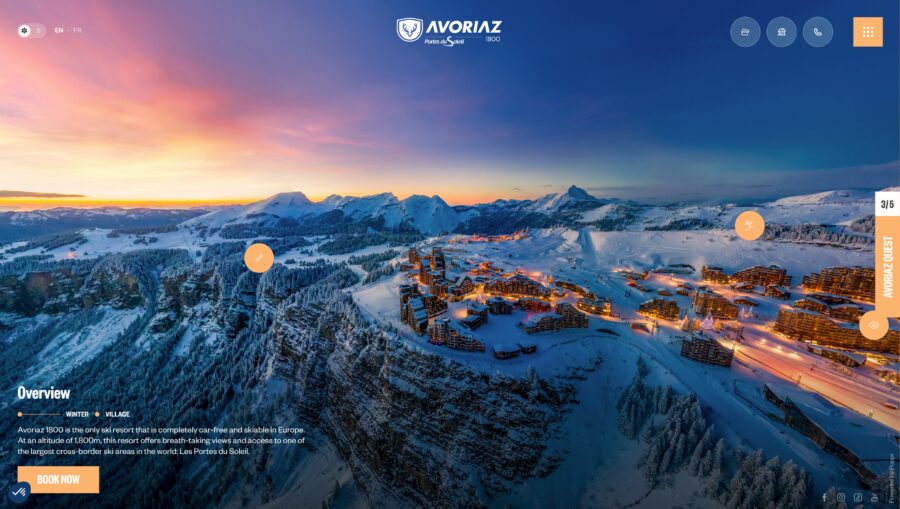
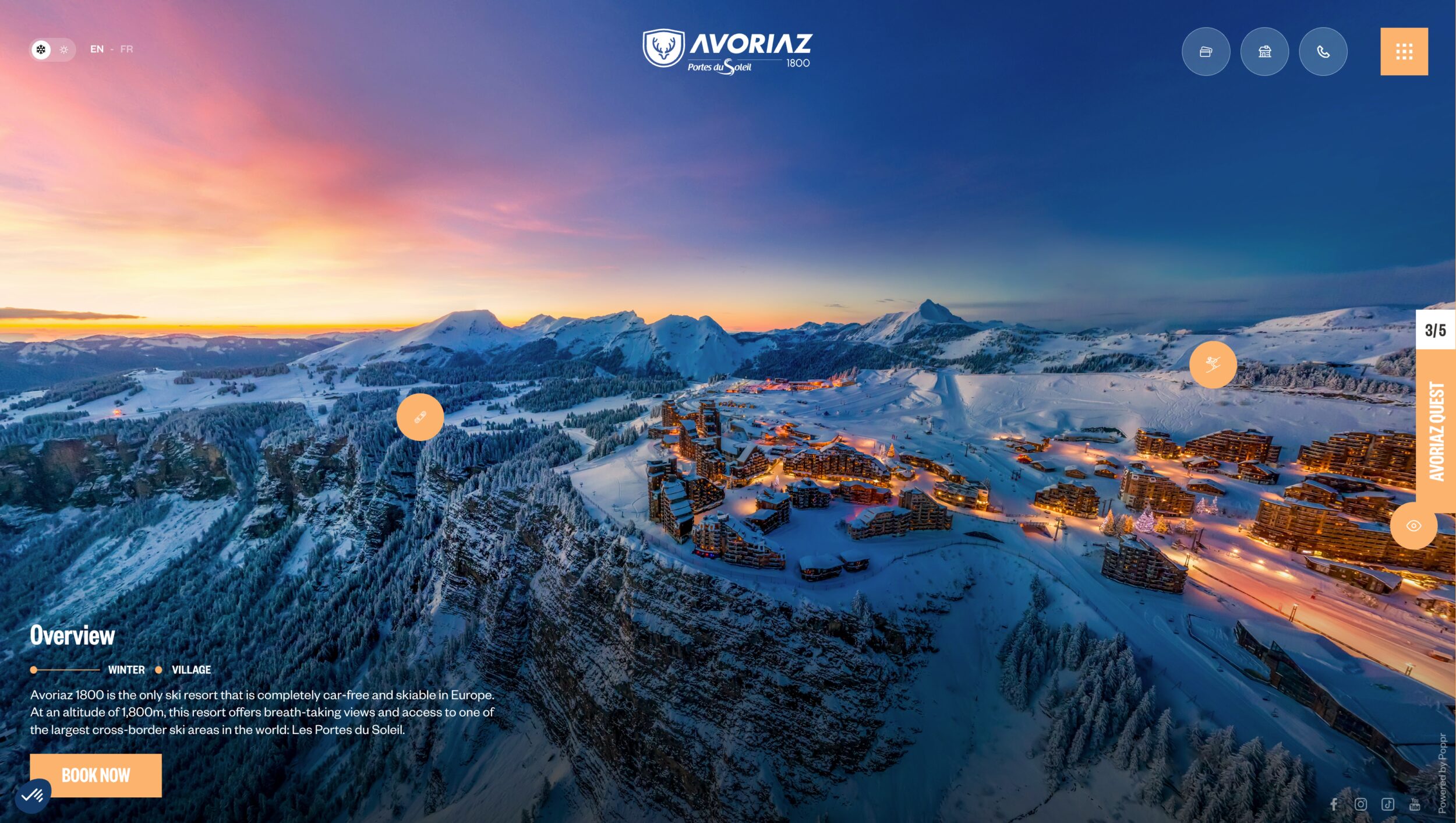
Their virtual tour is business critical for Avoriaz. Discover why through this in depth interview with Avoriaz and Poppr. We reveal the impact on engagement and bookings. And how this virtual tours sells better with each update. And with latest the 'Search Game update', their numbers exploded.
Introduction
This interview brings together two key voices behind one of the most successful virtual tour projects in Europe.
Steven Stumpf (Poppr) is the CEO and founder of Poppr, with seventeen years of experience creating high end virtual tours for some of the most iconic destinations, brands and institutions in Europe. His portfolio ranges from all Center Parcs parks in Europe, to complete digital twins of entire cities such as Virtual Bruges and Virtual Mechelen, major museums including the Van Eyck exhibition, historically sensitive locations like Auschwitz, and global industry leaders such as ArcelorMittal, Equans, Tesla and Volvo.
Benjamin Devos (Avoriaz) is the Digital Marketing Manager of Avoriaz, a resort widely considered to be in the top three ski domains in Europe when it comes to digital marketing. Avoriaz stands out for its bold ideas, clean execution and its willingness to innovate faster than nearly any other resort in the Alps.
For Poppr, this conversation is an opportunity to understand how one of Europe’s most digitally advanced ski resorts approaches virtual tours, interactive storytelling and online conversion. For Avoriaz, it is a chance to show how immersive technology became a core part of their communication strategy.
What follows is a deep and fascinating discussion about virtual tours, destination marketing, user behaviour and the Avoriaz Quest interactive search game.
1. Why a ski resort needs a virtual tour today
Steven (Poppr): When we looked at Avoriaz, it was immediately clear why a virtual tour makes sense. The resort is stunning, but also hard to explain with photos alone.
Benjamin (Avoriaz): Yes. People often don’t understand how Avoriaz works just by looking at images. They ask where they arrive, how the car free streets function, how close everything is to the slopes.
Steven (Poppr): And once they open the virtual tour, those questions disappear.
Benjamin (Avoriaz): Exactly. They see the layout and the ski in ski out flow in seconds. It reduces uncertainty and gives them a real feel of the place. It also lowers the number of basic questions we receive.
Steven (Poppr): So the virtual tour is not just inspirational. It’s practical.
Benjamin (Avoriaz): Yes. It helps people prepare and makes their decision easier. That’s why it quickly became an essential part of how we communicate Avoriaz.
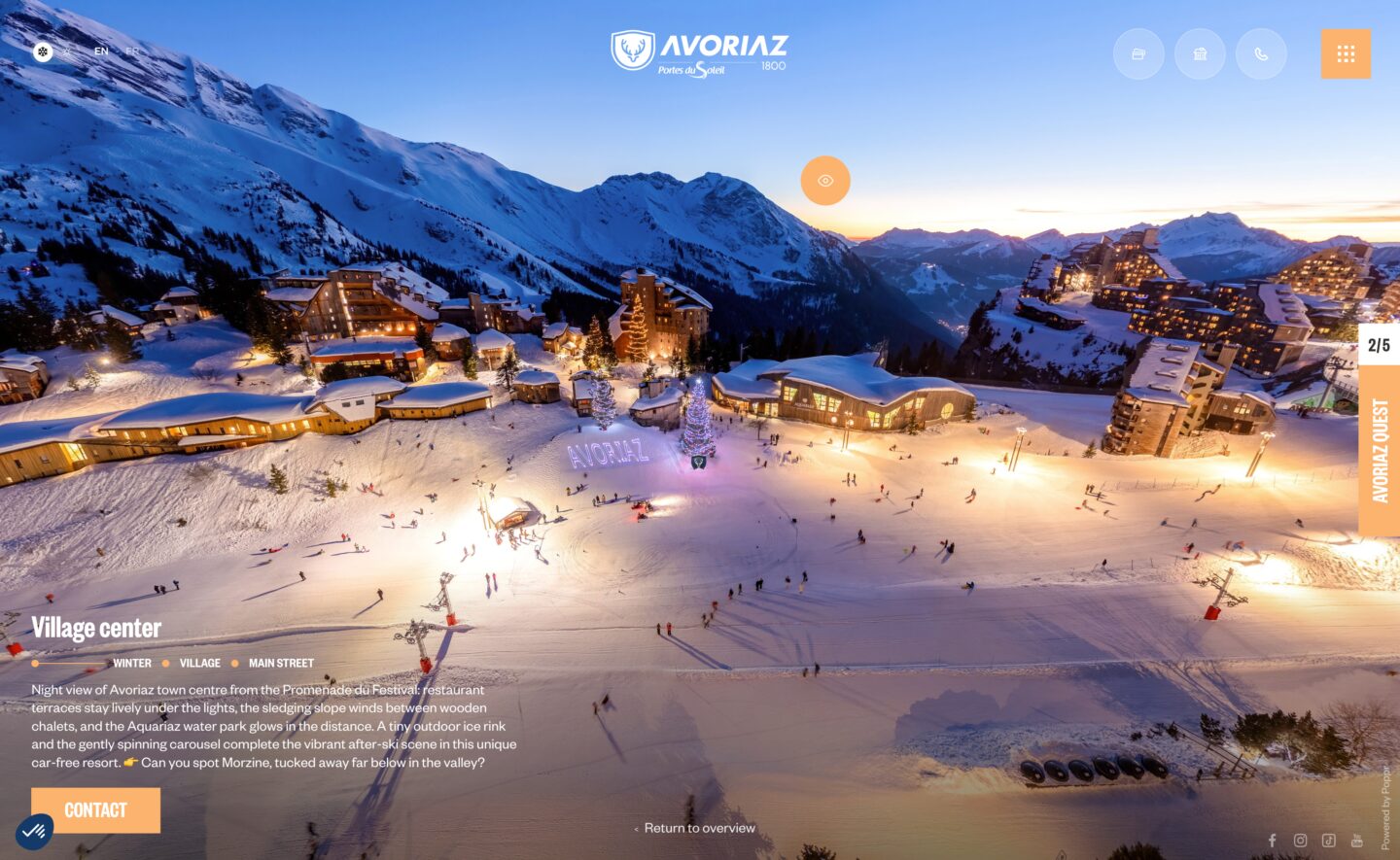
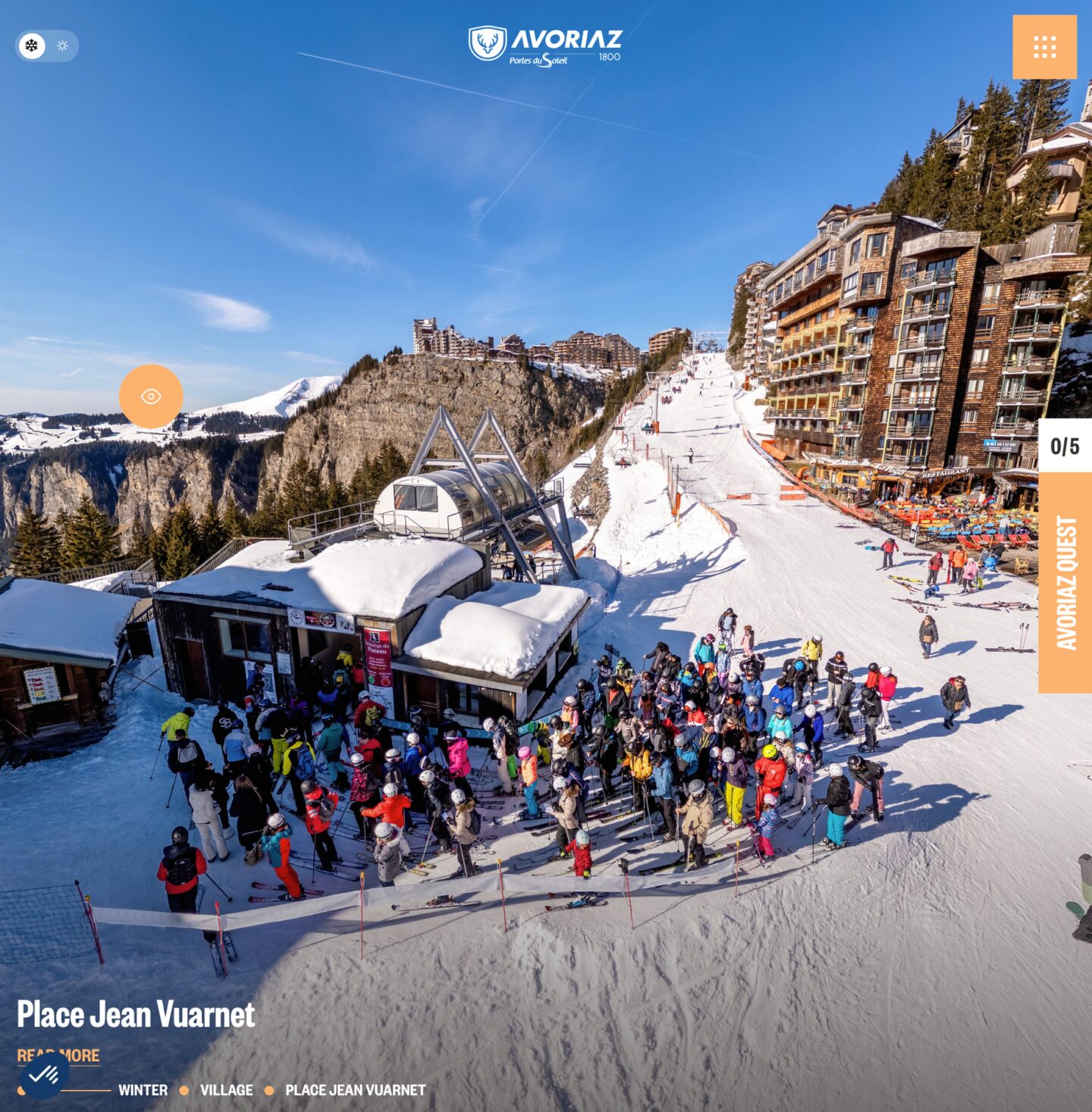
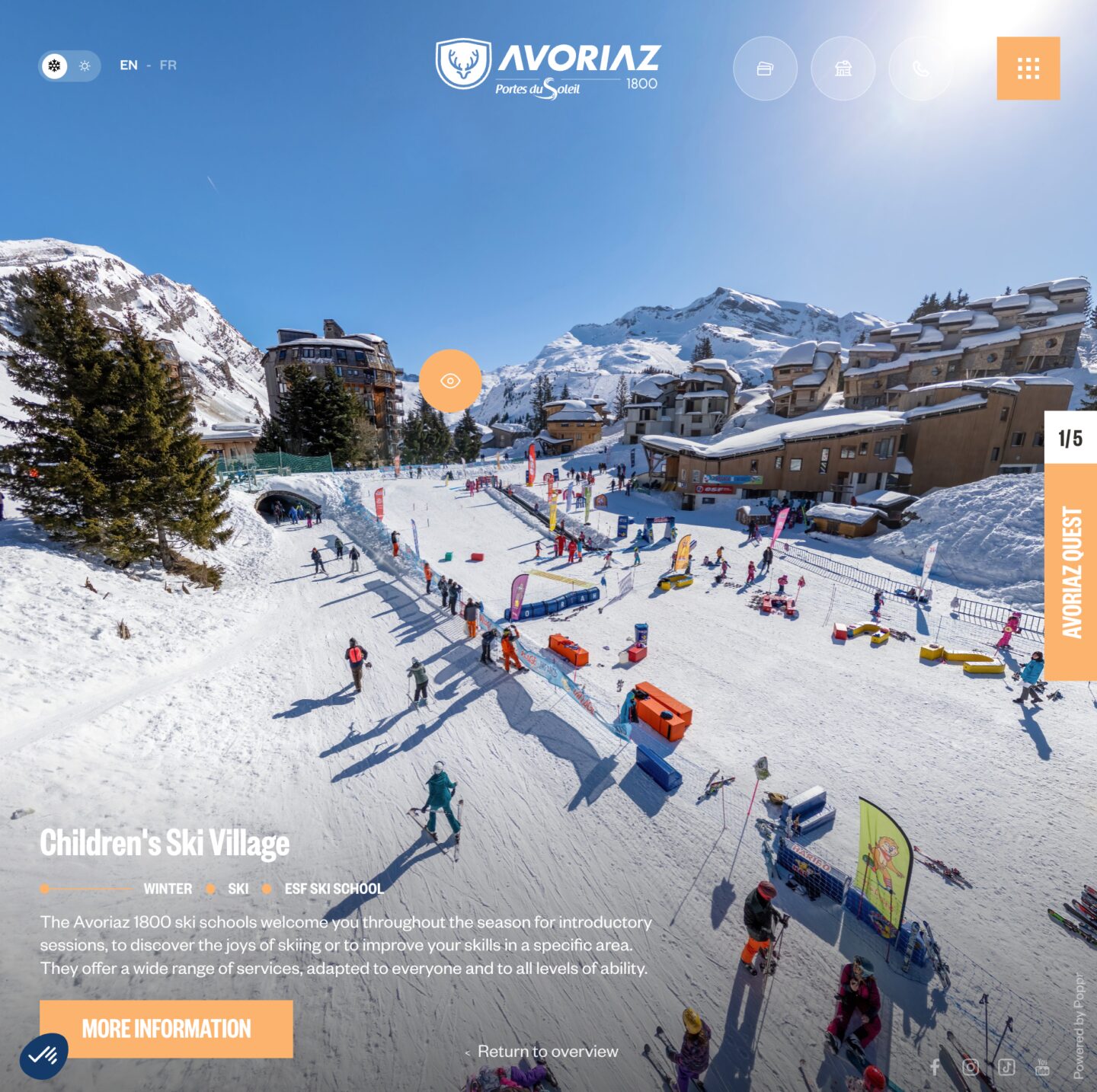
Avoriaz virtual tour: the car-free city centre high on a mountain plateau is unique in Europe.
2. Avoriaz Quest – The first interactive treasure hunt inside a virtual tour
Steven (Poppr): The Quest was such a fun idea. Can you walk me through how it all started?
Benjamin (Avoriaz): We wanted something simple but engaging. From 27 October to 12 December 2025 we turned the virtual tour into a treasure hunt. People had to find five hidden objects inside different 360 scenes. Nothing complicated, just playful.
Steven (Poppr): And it worked incredibly well.
Benjamin (Avoriaz): Yes, far beyond what we imagined. Internally we said: if we get around a 1000 email sign ups, that would already be a success. But we passed seven 7000! We didn’t expect that at all.
Steven (Poppr): It shows how naturally people explore when you give them a reason to stay.
Benjamin (Avoriaz): Exactly. And the numbers showed it. The Search Quest Game brought in around 43000 new visitors and more than 40000 sessions. Average visiting time more than doubled. The tour became something people played with, not just looked at.
Steven (Poppr): It almost created its own momentum.
Benjamin (Avoriaz): Yes. The concept connected immediately. People enjoyed searching, and along the way they discovered how Avoriaz works as a resort.
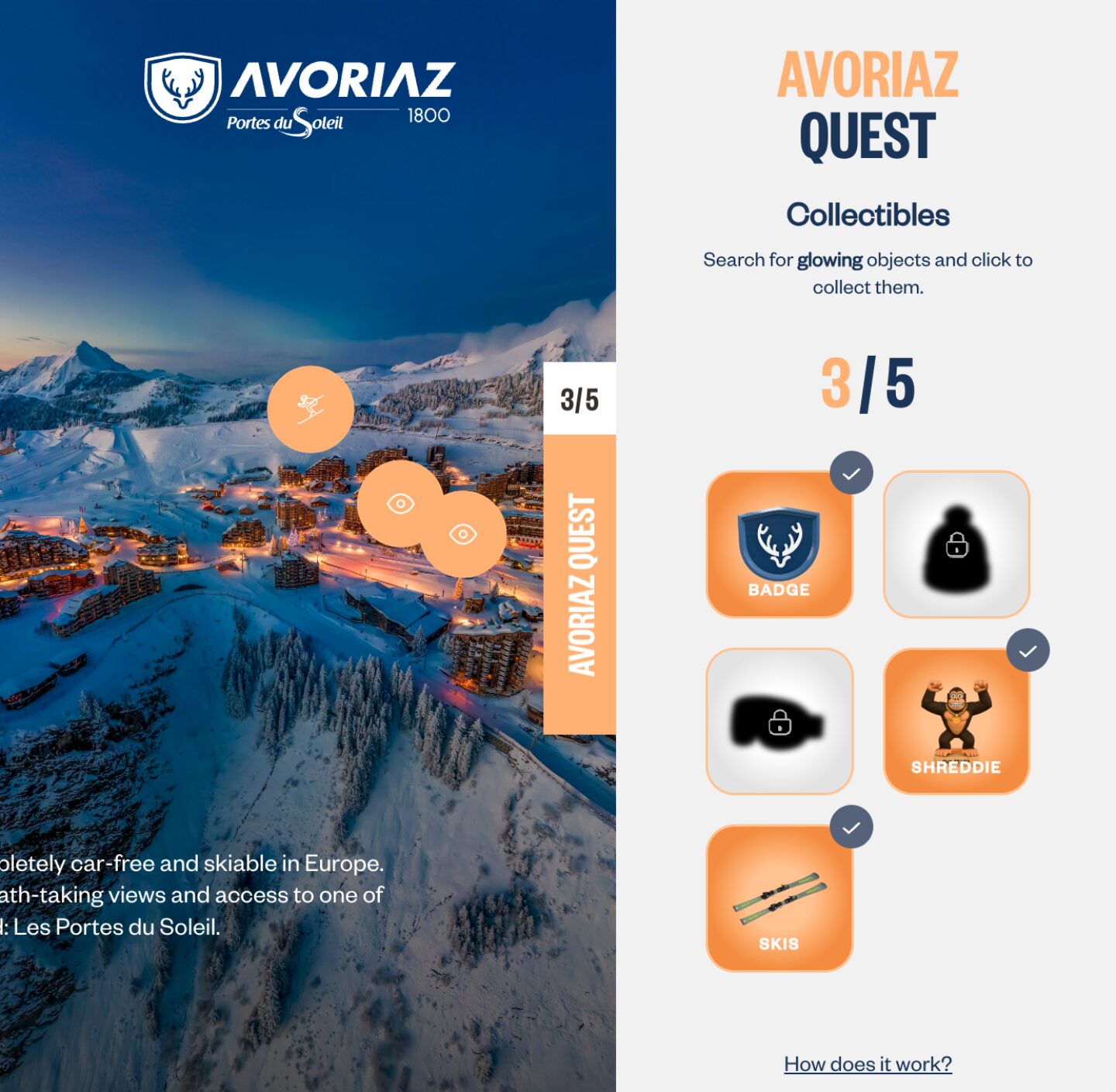
The Avoriaz Virtual Tour got updated with 'Quest' a search game where you could search for 5 hidden objects that were hidden all over the village and surrounding mountains.
3. Why the virtual tour outperformed everything else
Steven (Poppr): Before we worked together, we had already completed virtual tours for all twenty eight Center Parcs parks, including the newer flagship sites in France. Those projects gave us a clear view of how visitors interact with immersive content.
Benjamin (Avoriaz): Yes, and we had seen some of the performance numbers internally. They were hard to ignore.
Steven (Poppr): They were strong. On the Center Parcs platform we measured:
- +311 percent longer average session duration
- +56.8 percent higher conversion rate
- +34.8 percent higher average booking value
- +194 percent more pages viewed per session
Benjamin (Avoriaz): What convinced us was not just the numbers themselves, but how consistent they were. It showed that visitors really used the virtual tour, not just clicked it and left.
Steven (Poppr): Exactly. When people understand a destination better, they move through the website differently. They take their time, explore more, and arrive with fewer doubts.
Benjamin (Avoriaz): That was the key for us. We felt a virtual tour could help simplify communication, reduce questions and improve decision making for our visitors.
4. A short historical connection
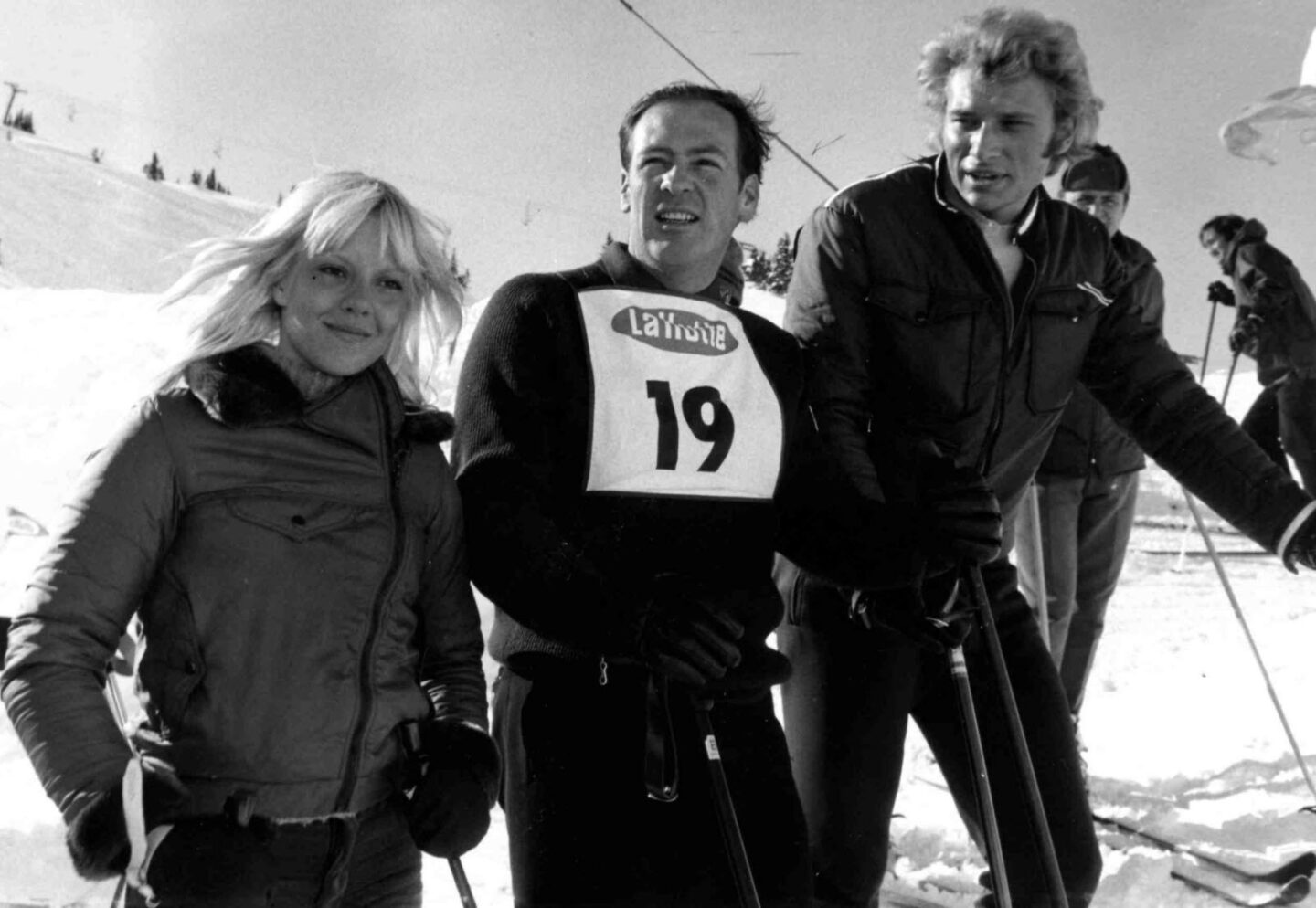
The partnership between Avoriaz and Poppr is not a coincidence. It is rooted in a piece of Alpine history.
Avoriaz was developed in the nineteen sixties by Gérard Brémond, the founder of the Pierre & Vacances–Center Parcs Group. Brémond received the mountain plateau from his father and transformed it into a car free, architecturally daring ski resort that became a global reference point for innovation in mountain tourism.
Decades later, the group he founded became one of Poppr’s major clients. After Poppr delivered virtual tours for all Center Parcs domains in Europe and achieved record breaking digital performance, the connection was clear.
If immersive storytelling and virtual exploration could transform Europe’s biggest family resorts, they could do the same for one of its most iconic ski destinations.
Avoriaz chose Poppr not only for technical expertise, but because both parties share the same philosophy: bold ideas, beautiful execution and absolute commitment to visitor experience.
5. How Avoriaz integrates the virtual tour
Steven (Poppr): When we look at your website, the virtual tour isn’t something hidden away. It’s everywhere. Can you explain how deeply it is integrated in your digital strategy?
Benjamin (Avoriaz): Yes, completely. We use it everywhere. It’s not only a marketing asset. It’s a functional tool that helps people understand Avoriaz instantly.
Steven (Poppr): Where does it appear most often?
Benjamin (Avoriaz): First in customer service. When people call us with questions about parking, arrivals, the car free streets, ski access or infrastructure, we often open the virtual tour and guide them to the exact spot inside the 360 view. They see it and understand immediately.
Steven (Poppr): So the virtual tour actually reduces the load on your support team?
Benjamin (Avoriaz): Yes, very much. It saves time. People feel reassured. They know what to expect.
Steven (Poppr): And on the website?
Benjamin (Avoriaz): We have many iframes. For example, on pages for the car park, the snowparks, arrival procedures, or new infrastructure. Instead of explaining everything with long text, we embed a part of the virtual tour. People see the image and say: ah yes, now I get it. It transforms complex explanations into something visual and simple.
Steven (Poppr): You also mentioned using the virtual tour for new buildings?
Benjamin (Avoriaz): Exactly. When we built the new ticket office, we showed it inside the virtual tour. People could explore it before arriving. It reduces confusion, especially during busy holidays.
Steven (Poppr): And outside the website?
Benjamin (Avoriaz): We extract panoramas for social media. They perform very well. Journalists also request the visuals for articles because the images are beautiful and atmospheric. And in the tourist office we use tablets. We show people the virtual tour when they need orientation. They become very focused. They move through the resort virtually and feel more confident.
Steven (Poppr): It sounds like the virtual tour has become a true 360 degree communication tool.
Benjamin (Avoriaz): Yes. People use it for planning their days, choosing slopes, deciding where to park, even choosing where to stay. Parents check which areas are easiest with children. Many people use it practically before arriving.
Steven (Poppr): We also suggested a large touchscreen for your tourist office.
Benjamin (Avoriaz): Yes, and we like that idea a lot. It would make the experience even more immersive for families.
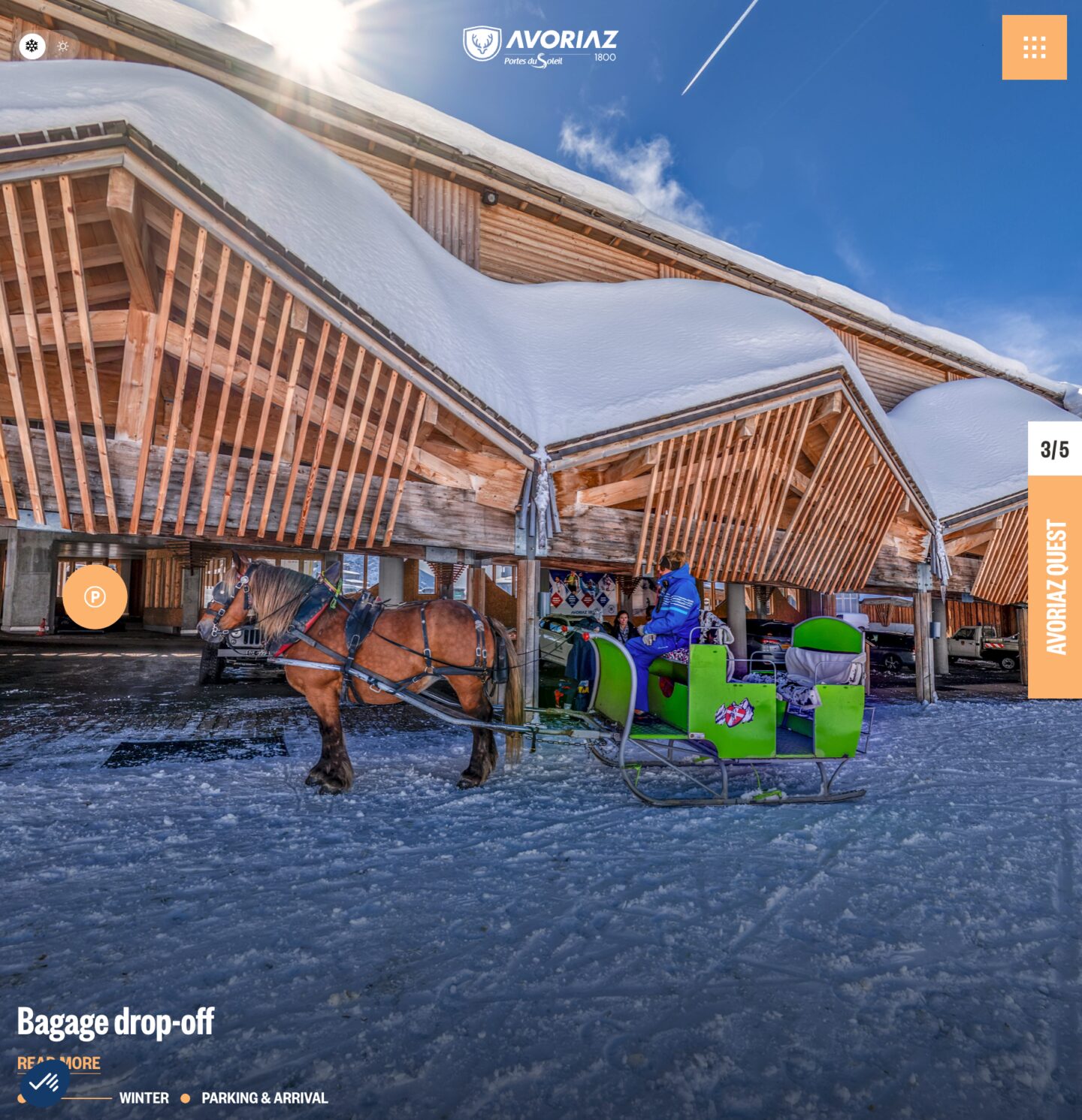
In this scene you see where you can park your car in Avoriaz, and then take a horse carriage to your hotel our apartment.
6. The virtual tour is perfect for people with social stress, autism and social anxiety
Steven (Poppr): Virtual tours do more than inspire. They remove uncertainty. They show people exactly what to expect before they arrive, and that makes a huge difference.
Benjamin (Avoriaz): Yes, completely. We see this all the time. Many visitors feel safer and more confident after exploring the virtual tour.
Virtual tours play an increasingly important role for people who experience anxiety, sensory overload, social stress or fear of unfamiliar environments. This is not a niche. These experiences are becoming more common across all demographics, especially in younger generations like Gen Z, who are statistically more prone to stress in new settings and who expect highly visual, transparent online information before making decisions.
A high quality virtual tour provides:
- Predictability: Visitors can preview busy areas, ski access, routes, and arrival points, reducing fear of the unknown.
- Visual orientation: People who struggle with large crowds, complex spaces or logistics can mentally prepare.
- Sensory clarity: Seeing the environment beforehand reduces overstimulation upon arrival.
- Autonomy and confidence: Visitors feel in control and self‑reliant rather than uncertain or dependent on staff.
- Accessibility without stigma: No need to declare a condition or request special information. The virtual tour quietly does the work.
Gen Z travellers in particular show a strong preference for digital transparency. They want a realistic, explorable preview before committing to a trip. For them, a virtual tour is not a luxury. It is a trust factor.
Benjamin (Avoriaz): Many people use the virtual tour long before they arrive. They explore where to park, how the streets connect, where the ski school is. It calms them. They feel prepared.
This makes virtual tours a powerful tool for inclusivity. They help destinations welcome a broader, more diverse audience with different emotional and sensory needs, without requiring any additional steps or disclosures from the visitor.
7. Behind the scenes – Creating the virtual tour
Steven (Poppr): When we arrived in Avoriaz for the shoot, we immediately felt how dynamic and alive the resort is. But photographing it is something completely different. You need perfect timing, perfect light, perfect angles. How did you experience those days on the mountain?
Benjamin (Avoriaz): Honestly, it was one of the smoothest collaborations we ever had. Your team worked from sunrise to sunset without hesitation. They were everywhere: on the slopes, on the rooftops, in the snowparks. Always ready to move, always chasing the perfect shot.
Steven (Poppr): Yvan Van Hoorickx, our Senior Lead 360° photographer, has a bit of a reputation for going all in. He's infamous for doing literally everything to get that magical aerial angle.
Benjamin (Avoriaz): Yes, I remember thinking: this is unusual. Most photographers want comfort. They say no to difficult terrain or cold wind. But your team was the opposite. They moved through the resort like locals. On skis, on foot, even climbing a ridge for a better viewpoint. It made a big impression.
Steven (Poppr): The weather was challenging too. Light changed every hour. Cloud shadows moved across the cliffs. But sometimes that creates the most breathtaking panoramas.
Benjamin (Avoriaz): Exactly. The shots you captured during those moments are extraordinary. We now use them everywhere: social media, press kits, advertising, brochures. Journalists ask for them constantly. People recognise Avoriaz instantly in those panoramas.
Steven (Poppr): A virtual tour is only as strong as the photography behind it. And Avoriaz has a very distinctive architecture. How important was it for you to capture that uniqueness?
Benjamin (Avoriaz): Essential. Avoriaz is unlike any other resort in the Alps. The wooden facades, the mimetic architecture, the way the village blends with the cliffs. It’s our identity. And your team captured that identity perfectly. The vertical lines, the shadows, the warm tones of the wood, the way the village curves with the landscape. The virtual tour shows Avoriaz exactly as we want the world to see it.
Steven (Poppr): For us it was a privilege. Not every resort has this atmosphere. Avoriaz feels cinematic.
Benjamin (Avoriaz): Yes, cinematic is the right word. The virtual tour almost looks like a film set. Many people told us that after seeing it they finally understood why Avoriaz feels so special.
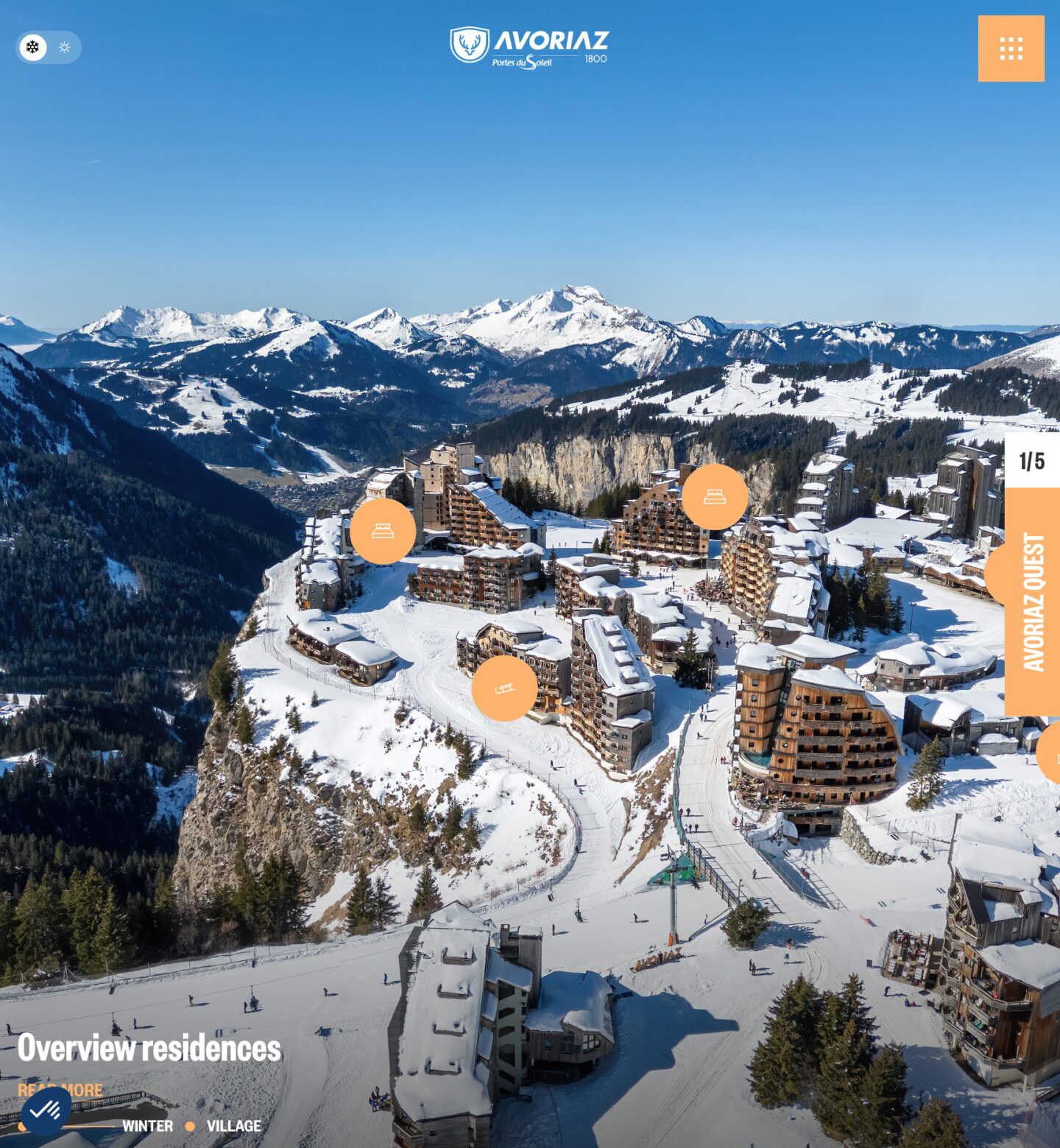
The typical wooden residences in Avoriaz, overlooking the majestical Morzine valley.
8. Why virtual tours are becoming essential for every destination
Steven (Poppr): When we look at the evolution of traveller behaviour, it seems virtual tours have moved from a nice to have to a must have. Why do you think that is happening so fast?
Benjamin (Avoriaz): Because people want certainty, emotion and transparency. A virtual tour gives all three. Visitors understand the layout, feel the atmosphere and trust the destination much more quickly. It is the closest thing to being there.
Steven (Poppr): We see this trend across Europe. Visitors no longer want to rely only on brochures or static images. They expect an interactive preview before they commit.
Benjamin (Avoriaz): Exactly. And for destinations, it is an opportunity. When people explore the virtual tour, they stay longer on our website, they discover things they didn’t know existed and they start imagining their holiday. It increases the emotional connection.
Steven (Poppr): And emotional connection is what drives bookings.
Benjamin (Avoriaz): Yes. We see that visitors who browse the virtual tour come with more precise questions or sometimes with no questions at all because they already feel prepared. It reduces friction at every step.
Steven (Poppr): Another shift we notice is that people expect realness. No overpolished visuals. They want authenticity. A virtual tour shows the destination exactly as it is.
Benjamin (Avoriaz): And that honesty builds trust. It is good for families, for skiers, for beginners, for anxious travellers, for international guests. Everyone benefits because expectations become real.
Steven (Poppr): This makes virtual tours not only a conversion tool, but also a long term brand asset.
Benjamin (Avoriaz): Yes, completely. And I think in the future, virtual tours will become interactive platforms. Not only to view, but to plan activities, to book ski lessons, to choose equipment, to understand snow conditions. They will evolve. And we want to stay ahead of that evolution.
9. The future – Summer virtual tours and new games
Steven (Poppr): The winter campaign was a huge success, especially with the Avoriaz Quest. Are you already thinking about what comes next?
Benjamin (Avoriaz): Yes, absolutely. Right now we are in the rush of the season, but starting February we will begin planning for summer. Summer is becoming more important for Avoriaz. Visitors are discovering hiking, mountain biking, wellness activities, and family experiences in the mountains. We want the virtual tour to reflect that.
Steven (Poppr): So the virtual tour will get a summer version as well?
Benjamin (Avoriaz): Yes. We already took new shots last summer. They show Avoriaz in a completely different atmosphere: green landscapes, open trails, blue skies. It is beautiful. And we want to use these visuals in a new way, maybe even through another interactive concept.
Steven (Poppr): Like a summer edition of the Quest?
Benjamin (Avoriaz): Maybe. The winter Quest worked much better than we imagined. It engaged people, it entertained them, and it helped them understand Avoriaz. If we can create a summer experience that does the same, we will do it. But we want to take the time to think about the right idea.
Steven (Poppr): Summer tourism in the Alps is evolving quickly. A strong virtual tour can make a huge difference.
Benjamin (Avoriaz): Exactly. Many people don’t know what an alpine resort looks like in summer. The virtual tour can show them. It can trigger curiosity and inspire people to book a summer trip for the first time.
Steven (Poppr): And it deepens the relationship between the visitor and the destination.
Benjamin (Avoriaz): Yes. Winter brings one type of visitor, summer brings another. With virtual tours we can speak to both. And in the future we want to connect the experience across seasons. A visitor who first explored Avoriaz in winter may come back for summer, and vice versa.
Steven (Poppr): So the virtual tour becomes a long term, multi season storytelling tool.
Benjamin (Avoriaz): That is exactly how we see it. Not just as a static tour, but as a platform we can keep developing, with new hot spots, new animations, new games and new explanations. It will grow with Avoriaz.
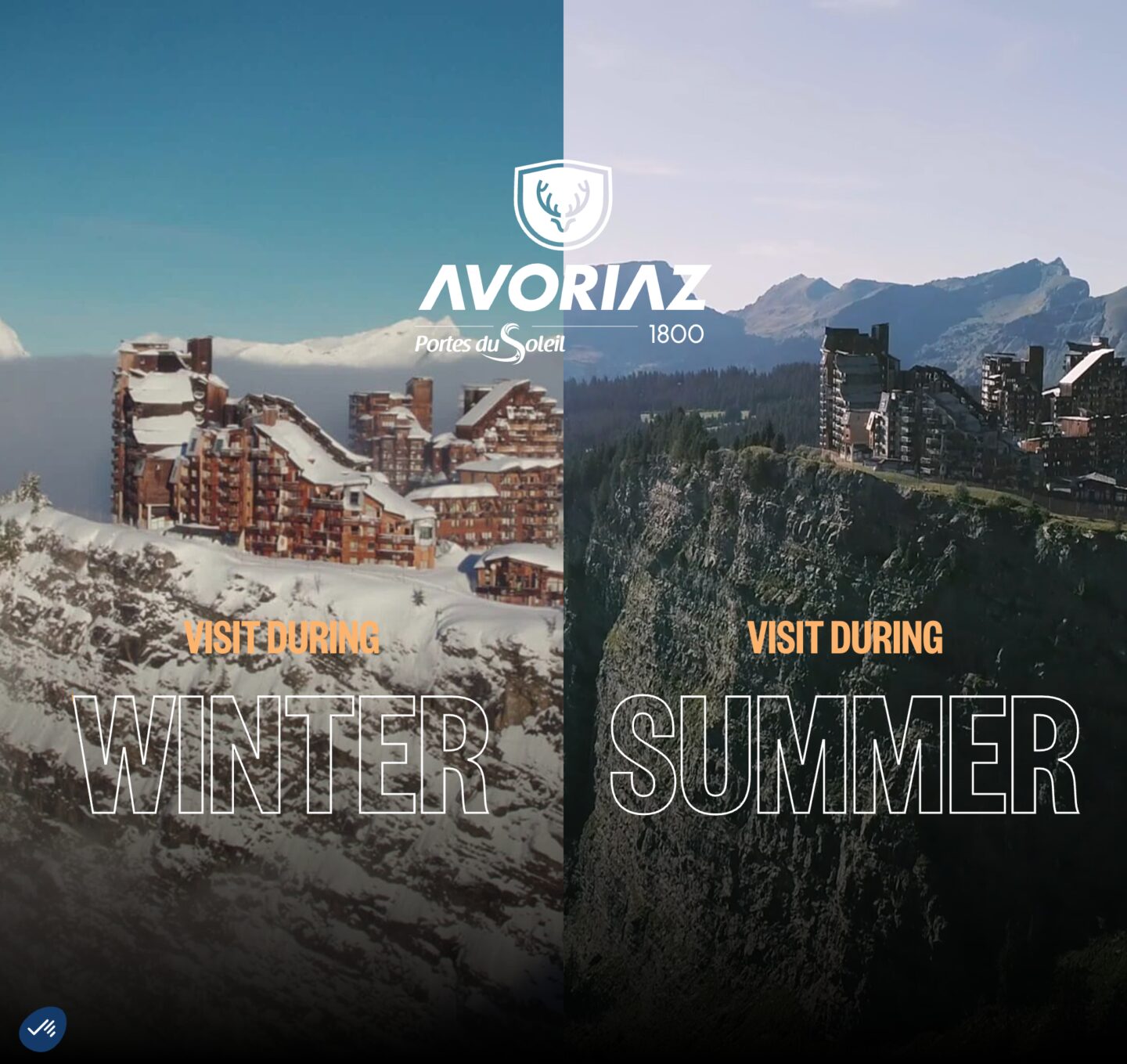
When you visit the virtual tour of Avoriaz, you can chose between visiting Avoriaz in Winter or in Summer.
10. Closing reflections
Steven (Poppr): When you look at everything we’ve done together so far, how would you describe the collaboration?
Benjamin (Avoriaz): Straightforward and effective. We had a clear goal, and your team delivered exactly what we needed. The virtual tour helps visitors understand Avoriaz faster, and the Quest brought in strong engagement. For us, that’s what matters.
Steven (Poppr): It feels like the virtual tour is becoming part of your core digital toolkit.
Benjamin (Avoriaz): Yes. Not as a decorative feature, but as a functional asset. It answers questions, reduces friction and improves the visitor journey. That is why we plan to keep building on it.
Steven (Poppr): And for the future?
Benjamin (Avoriaz): We will continue developing the tour across seasons and use it wherever it adds clarity for our guests. Digital habits evolve quickly. Having a flexible, visual tool like this helps us stay ahead.
Steven (Poppr): Good. Then we keep improving it step by step.
Benjamin (Avoriaz): Exactly. No big speeches, just useful digital work that makes the experience better.
The collaboration between Avoriaz and Steven (Poppr) is anchored in clarity, practicality and shared standards of quality. The virtual tour is not treated as a one‑off campaign, but as an evolving tool that supports real visitor needs.
It improves understanding, reduces uncertainty and strengthens the connection between the resort and its guests.
And that is ultimately what good digital work should do.
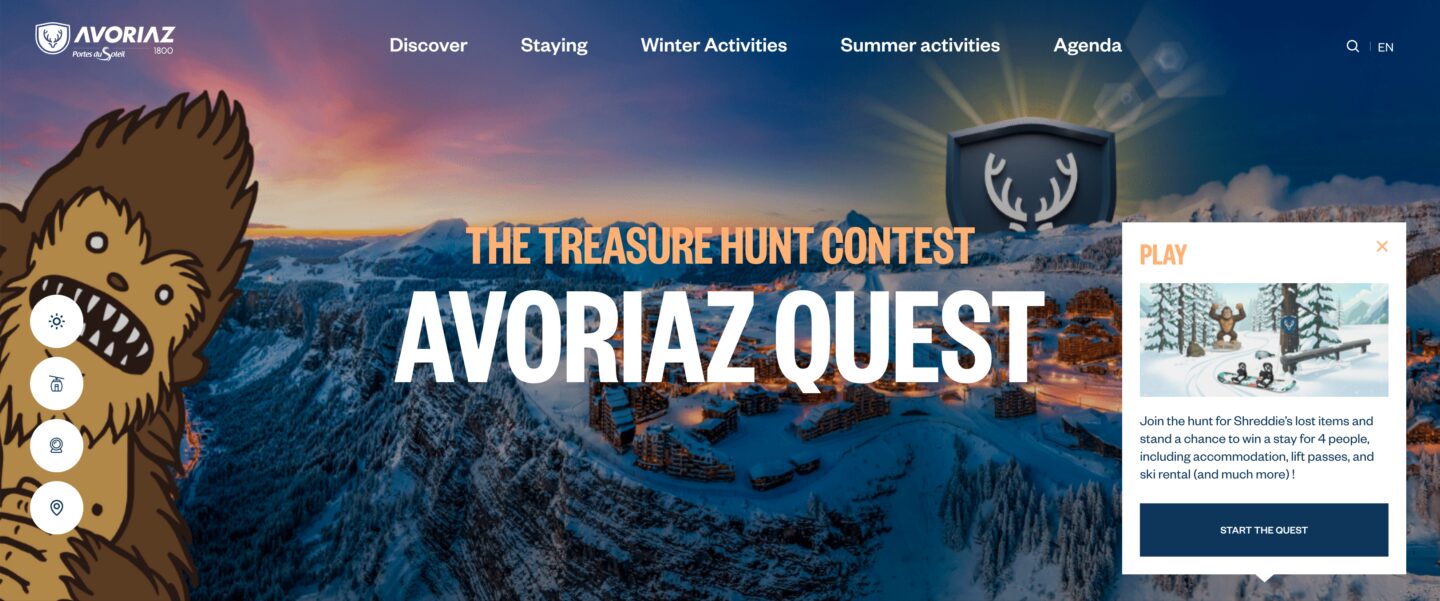
The 'Avoriaz Quest', the search game within the virtual tour of Avoriaz, was a big succes on the website, social media and with the partners of Avoriaz.