oPEN Lab Genk: a Positive Energy Neighbourhood, made visitable
A digital embassy for a complex European project
oPEN Lab stands for "Open Innovation Living Labs for Positive Energy Neighbourhoods." Even unpacking the acronym takes a sentence. The project itself is harder still: 32 partners across 7 countries, 14 of them Belgian, working in real residential streets to turn ordinary post-industrial neighbourhoods into places that produce more energy than they consume. It is co-funded by the EU under the Horizon programme. Genk is one of three living labs across Europe.
When EnergyVille and VITO approached us, the brief was specific. The Genk living lab needed a window into the project that worked for everyone at once. Scientists, policymakers, students, residents of Nieuw Texas and Tuinwijk Waterschei, and the curious citizens who happened to walk past on Science Day. With the Dag van de Wetenschap on 23 November 2025 as the launch deadline, we had a defined window to deliver something that could carry their public engagement and keep working long after the event ended.
Highlights
Project at a glance
- A 360° virtual tour of two real Genk neighbourhoods, plus the technical energy boxes that power them.
- 10 navigable scenes built around the Open Thor Living Lab visual identity.
- A live-data dashboard powered by the SmarThor API with outdoor temperature, solar irradiance, daily energy production, and yearly cumulative energy.
- Custom CMS so the oPEN Lab team can update content as the research evolves over the years ahead.
What Positive Energy Neighbourhood means in Genk
The Genk living lab covers two neighbourhoods that sit side by side, each carrying its own history.
Tuinwijk Waterschei is a 100-year-old miners’ garden district, built in the 1920s with the small terraced houses and tree-lined streets that came with that era of Belgian industrial planning. Today, seven heritage homes belonging to engaged owner-residents are being energy-renovated as oPEN Lab test cases. Each is being fitted with a heat pump, solar panels, insulation, a battery, and where applicable a charging station. The chosen technologies vary per home, aligned with each owner’s renovation plans and the character of the dwelling. The owners insulated their own houses to a "heat pump-ready" level under guidance from a Stebo advisor. VITO monitors the cases to learn how the technologies, the energy use, and resident experience interact in practice.
Nieuw Texas, a few streets away, is a different proposition. Established in 1995 as the successor to the former Texas district, it is a mix of social housing managed by Wonen in Limburg and private homeowners. Part of Nieuw Texas is now evolving into what the project calls a "klimaatwijk", a climate neighbourhood. Under oPEN Lab, technological renovations, new energy concepts, and active resident participation are combined to make the living environment more sustainable and more comfortable.
The two together represent something almost every European city has: an older neighbourhood that needs renovation, sitting alongside a more recent social housing estate that needs the same. What oPEN Lab is testing in Genk is whether you can renovate both at once into homes that produce more energy than they consume, in a way that the rest of Europe can copy.
The brief: make the invisible visitable
What the platform had to do
- Let anyone walk through the actual streets where the renovations are happening, at their own pace.
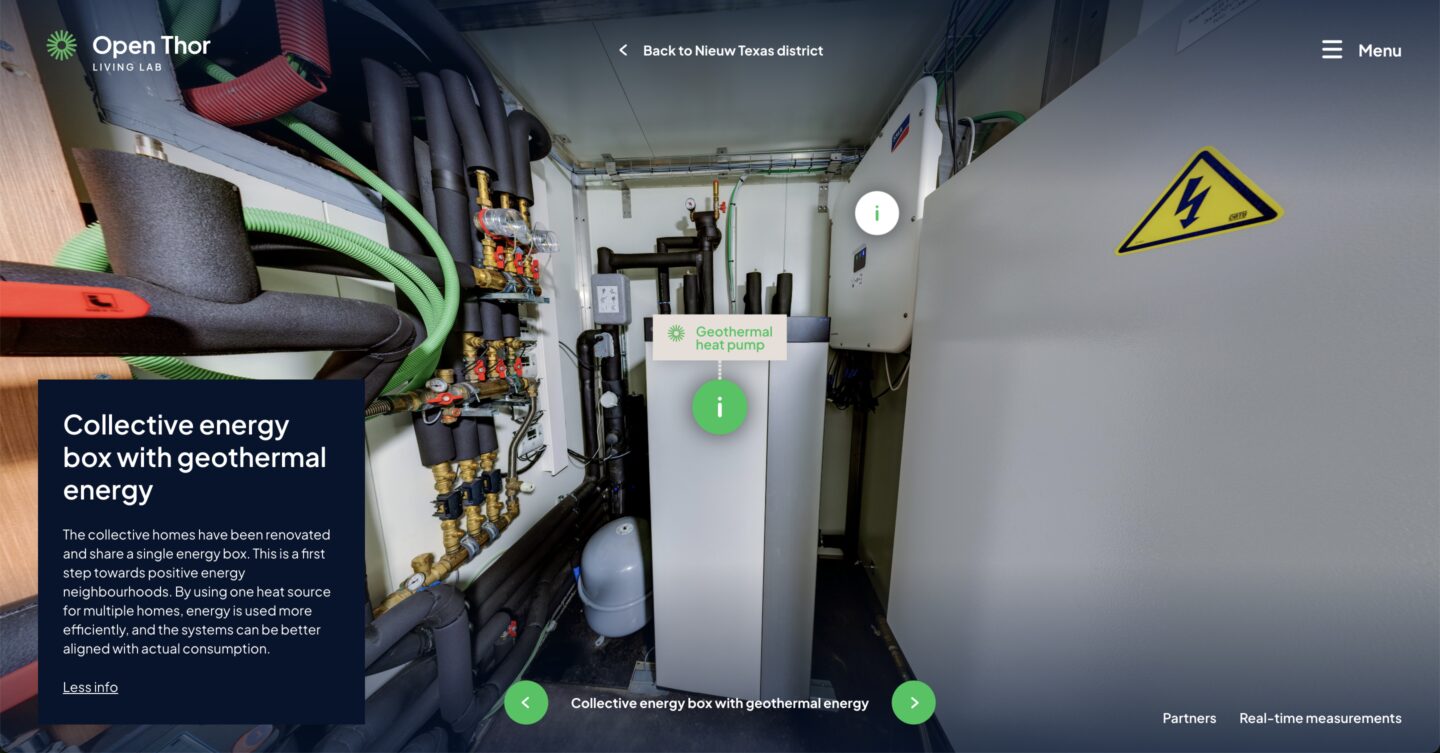
- Show the technical installations that power the energy positivity (heat pumps, ventilation systems, solar inverters, batteries, thermal storage), inspectable up close with explanations embedded in each scene.
- Surface live data from the Genk site so visitors see for themselves that the research is producing measurable energy right now, not just in theory.
- Outlast the launch event and grow alongside the research over the years ahead.
On location in Genk
We visited the oPEN Lab sites in Genk to capture them in 360 degrees. The shoot covered three distinct types of location.
The first was the residential neighbourhoods themselves. Real homes, real streets, real residents. We worked at street level and from the air to give visitors a sense of the scale, the texture of the brickwork, the way the light moves between the houses, the difference in feel between the 1920s miners’ streets of Tuinwijk Waterschei and the 1990s social housing layout of Nieuw Texas.
The second was the energy boxes. These are the technical installations that house the heat pumps, ventilation systems, solar inverters, batteries, and monitoring equipment that makes the positive-energy concept possible. They sit outside the homes, freeing up indoor space and letting technicians service them without disturbing residents. There are individual energy boxes for single homes and collective boxes that serve groups of two, three, or four homes through a shared system. Within those, several technology mixes are being tested in parallel: air-to-water heat pumps, water-to-water (geothermal) heat pumps, AC and DC batteries, ventilation systems C+ and D, and several flavours of integrated solar (BAPV, BIPV, PVT, solar thermal). Each renovated home carries more than 200 sensors. The point of the lab is to learn which combinations actually deliver on comfort, affordability, and energy performance.
The third was the public infrastructure that ties the neighbourhoods together. The central square is being transformed into a green meeting place with a PV canopy, a bicycle charging station connected to the new Kolenspoor cycle path, EV charging, a neighbourhood battery for shared energy storage, and a central technical room with a weather station and sensors. Sitting alongside it is the Transisthor participatory art project, whose first artwork "Now or Never" by Kristof Vrancken and Niek Kosten of LUCA School of Arts is printed directly onto solar panels that power the local community centre.
The shoot produced 10 scenes across the tour. Every panorama was chosen to represent a distinct aspect of the project. The Open Thor Living Lab visual identity gave us a strong design foundation to build a coherent experience across every scene, with the branding carrying through from the landing page to the navigation menu to the real-time dashboard.
Inside the platform
The platform does more than show the space. At its core is a 360° virtual tour with navigable panoramas connected by interactive hotspots, so visitors can move freely through the project and discover each zone at their own pace. Every location includes contextual information embedded directly into the scene, with descriptions of what they are looking at and why it matters. Visitors can step into an individual home and see the technologies that make it energy-positive. They can step into the collective energy boxes and inspect the difference between an air-water and a water-water installation. They can stand on the central square and look up at the future PV canopy. A custom CMS gives the oPEN Lab team full control to update or expand that content as the research evolves.
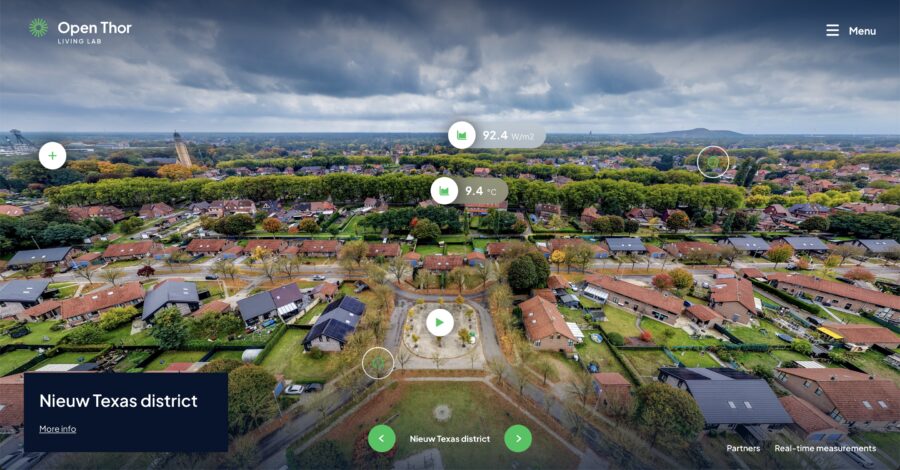
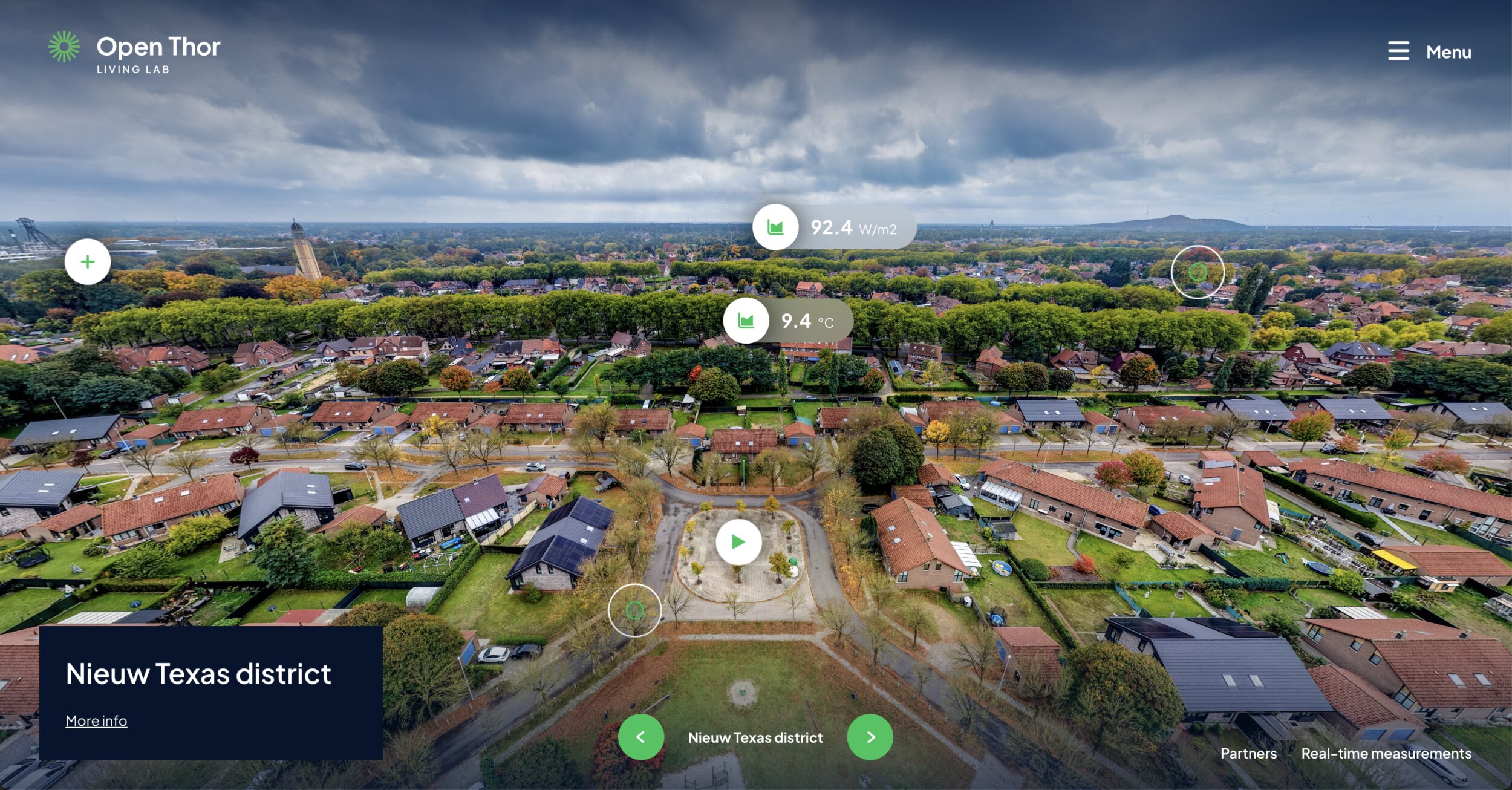
The most technically distinctive element is the real-time measurements dashboard, integrated directly into the experience. Drawing on the SmarThor API, it surfaces live data from the Genk sites: current outdoor temperature, global horizontal irradiance, total solar energy generated today, and cumulative energy generated across the year. The data refreshes every 30 minutes and is presented in a format that works for expert and general audiences alike.
Because the data is live, the tour shows what the neighbourhood is doing right now, not what it looked like on the day we photographed it.
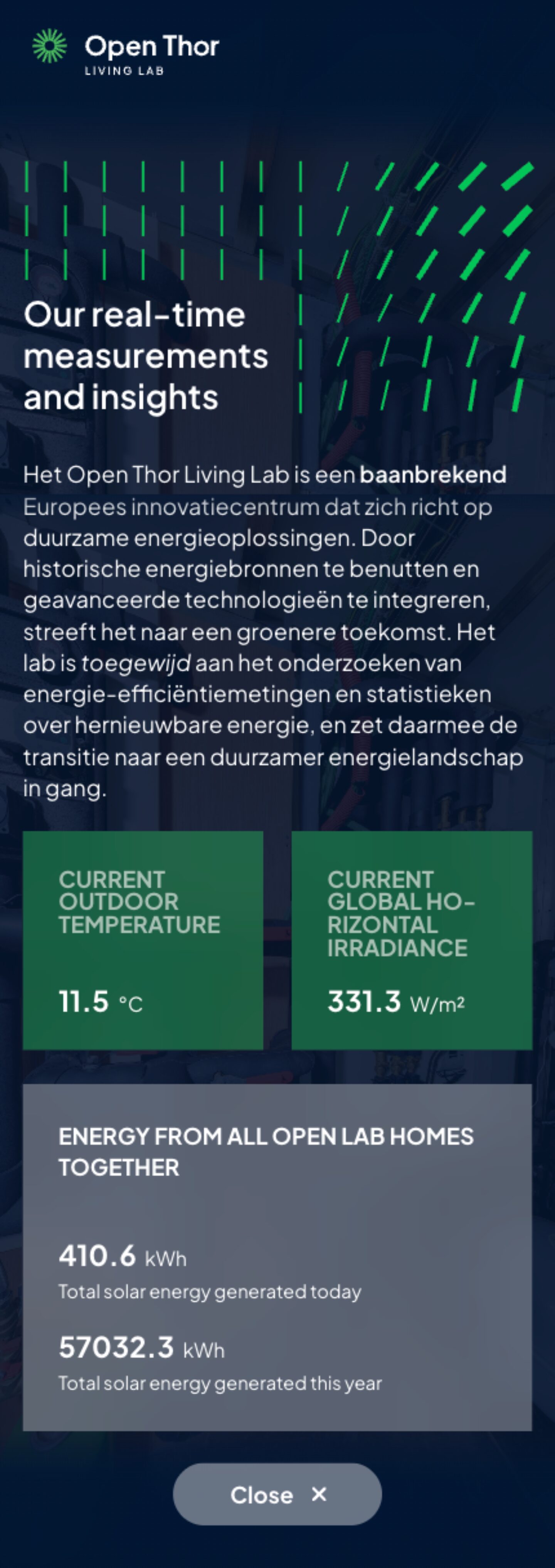
The live measurements dashboard, drawing on the SmarThor API with outdoor temperature, solar irradiance, and cumulative energy generated.
Buurthuis De Singel and the role of community
A platform like this only works if the community it represents recognises itself in it. In Tuinwijk Waterschei, that community has a physical centre at Buurthuis De Singel, the local community house at the heart of the district. De Singel is the hub for neighbourhood development work, a youth welfare organisation, a socio-artistic workshop, and dozens of resident initiatives.
In recent years De Singel and its surroundings have been turned into an educational and inspirational hotspot for climate action. Green planting, water buffers, infiltration zones, and smart rainwater storage make the site a living example of climate adaptation. The "Now or Never" solar artwork, hosted at the same site, gives the centre a literal energy contribution alongside its social one.
We treated De Singel as one of the platform's anchor scenes for a reason. The Positive Energy Neighbourhood story is not only about heat pumps and PV inverters. It is also about whether residents can see themselves inside the project. The community centre is where that recognition happens, and the virtual tour reflects it.
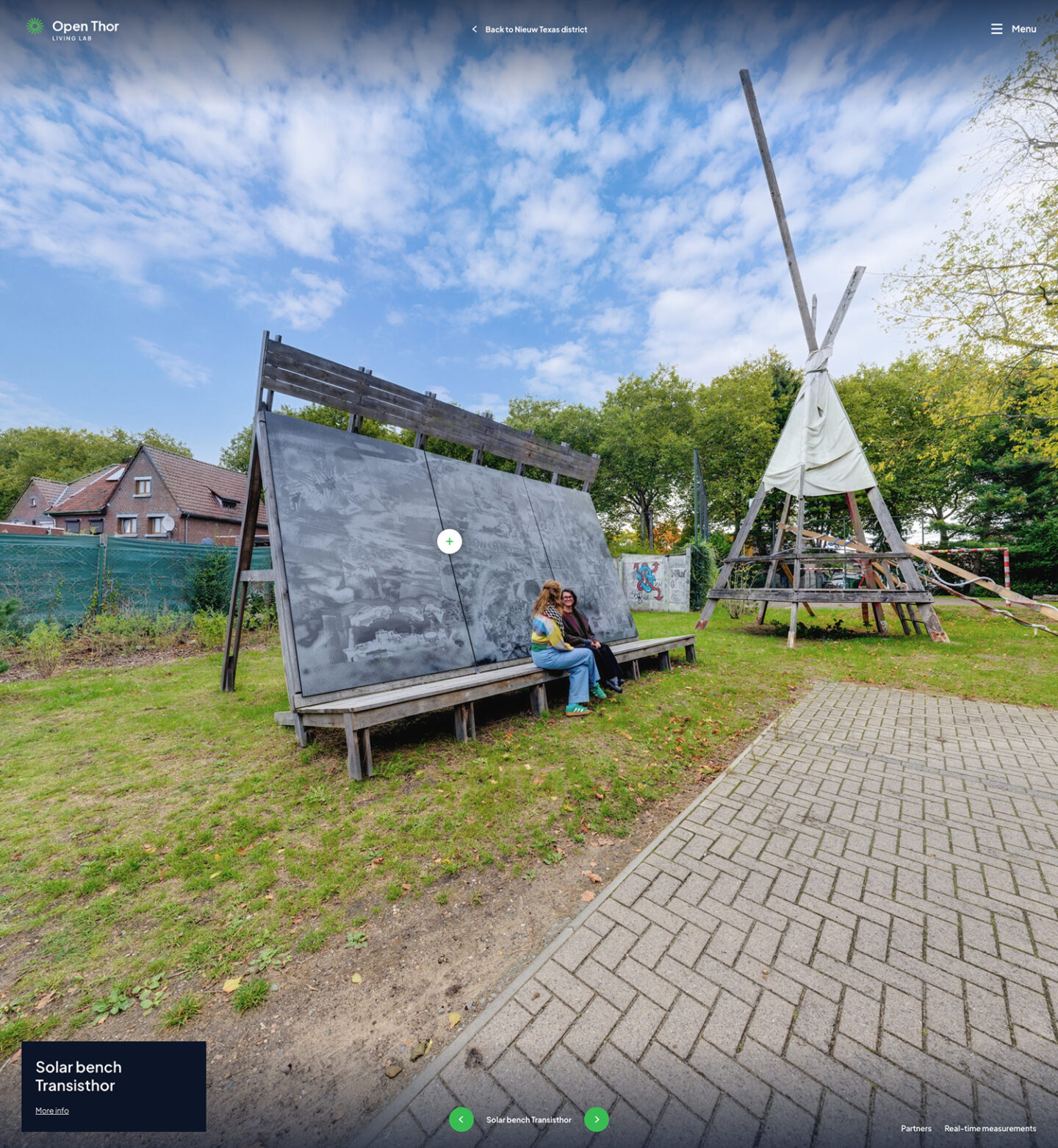
Buurthuis De Singel, the community centre at the heart of Tuinwijk Waterschei, transformed into an educational hotspot for climate action.
A debut on Science Day
The platform went live at 360openlab-genk.eu, just in time for the Dag van de Wetenschap. The oPEN Lab team ran the dashboard on a large touchscreen as the centrepiece of their public exhibit, and by their own account it stole the show.
Beyond the public debut, the platform gives oPEN Lab a lasting tool for outreach, education, and partner communication across all 7 countries in the project. The built-in CMS means the content can grow alongside the research. With live data flowing directly from the Genk site into the experience, every visit reflects what oPEN Lab is doing right now, not just what it looked like at the time of the photo shoot.
For a European project whose whole purpose is to inspire other cities to follow, that mix of accessibility and credibility is the message they need to send.
Why this work matters beyond Genk
oPEN Lab Genk is a research project, not a marketing one. But its success rests on a marketing-shaped problem: convincing other cities, ministries, and consortia that a Positive Energy Neighbourhood is real and repeatable, not a slide in a Horizon proposal.
The platform is built for that. A scientist can pull the live data. A policymaker can see proof that the numbers exist. Someone living in a similar neighbourhood elsewhere in Europe can picture it on their own street. A local journalist can write a story they could never write from a brochure. One experience covers all of them, with no separate version for each.
This is the kind of project that makes the case for immersive platforms in research and public-sector work. When something is genuinely complex, genuinely multi-partner, and meant to outlast a single funding cycle, a brochure or a video rarely does it justice. People need a place they can visit, come back to, and watch change. That is what we built for oPEN Lab.
Credits
- •
oPEN Lab Genk: a Positive Energy Neighbourhood, made visitable
Related work
Virtual Mechelen: the Official Virtual Tour for the City of Mechelen
Stad Mechelen
Web experiences • Virtual reality • 360° Photography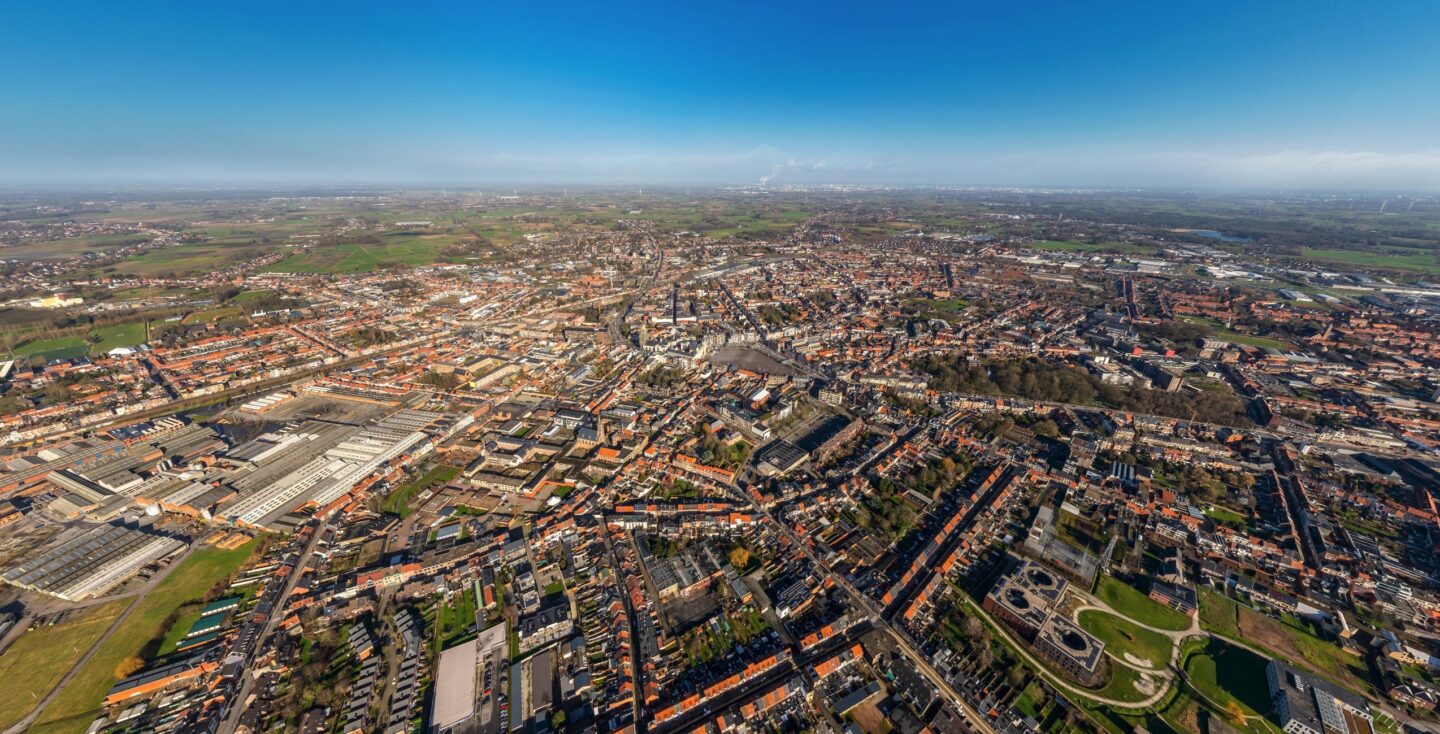
Highlighting urban redevelopment in virtual reality
Stad Sint-Niklaas
Web experiences • 360° Photography • 360° Video • 3D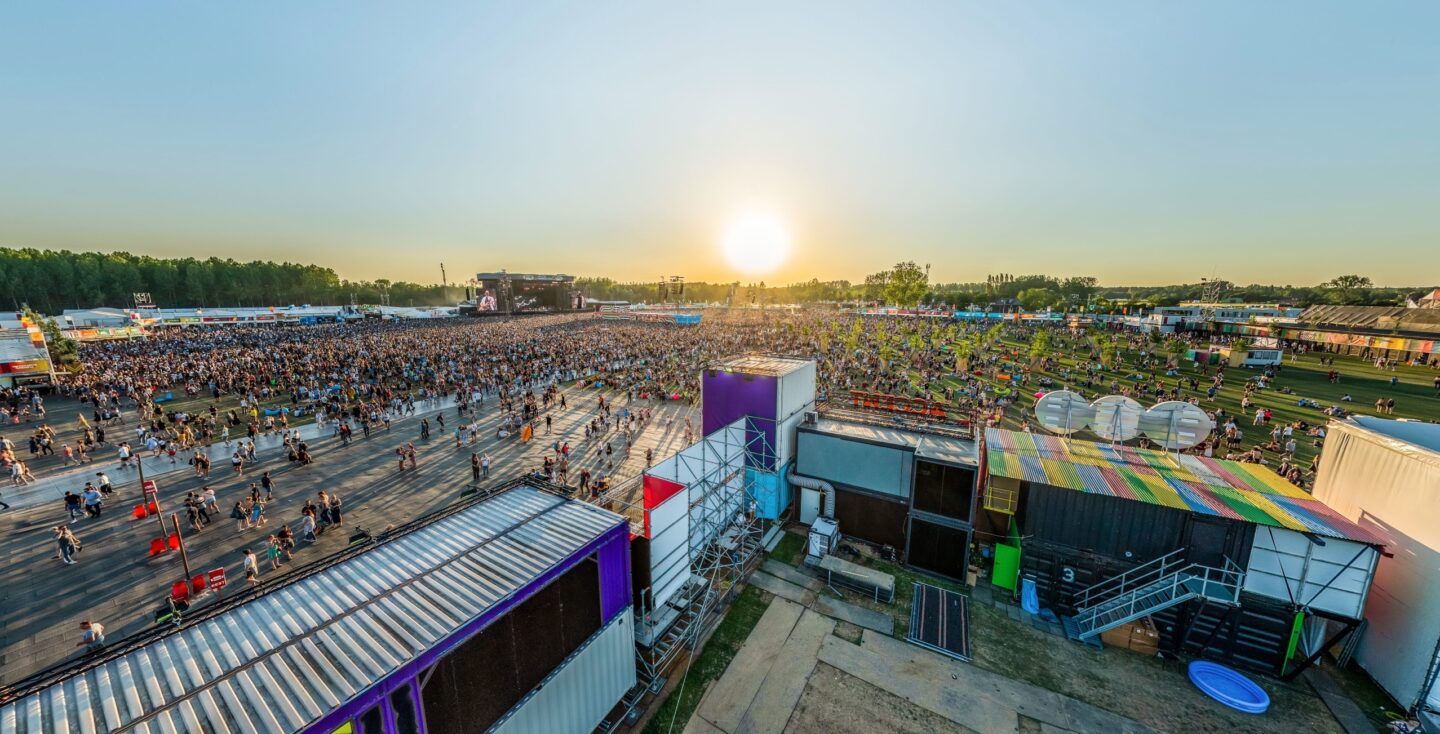
Highlighting the cultural heritage of Vlaams-Brabant, using virtual reality
Vlaams-Brabant
Web experiences • 360° Photography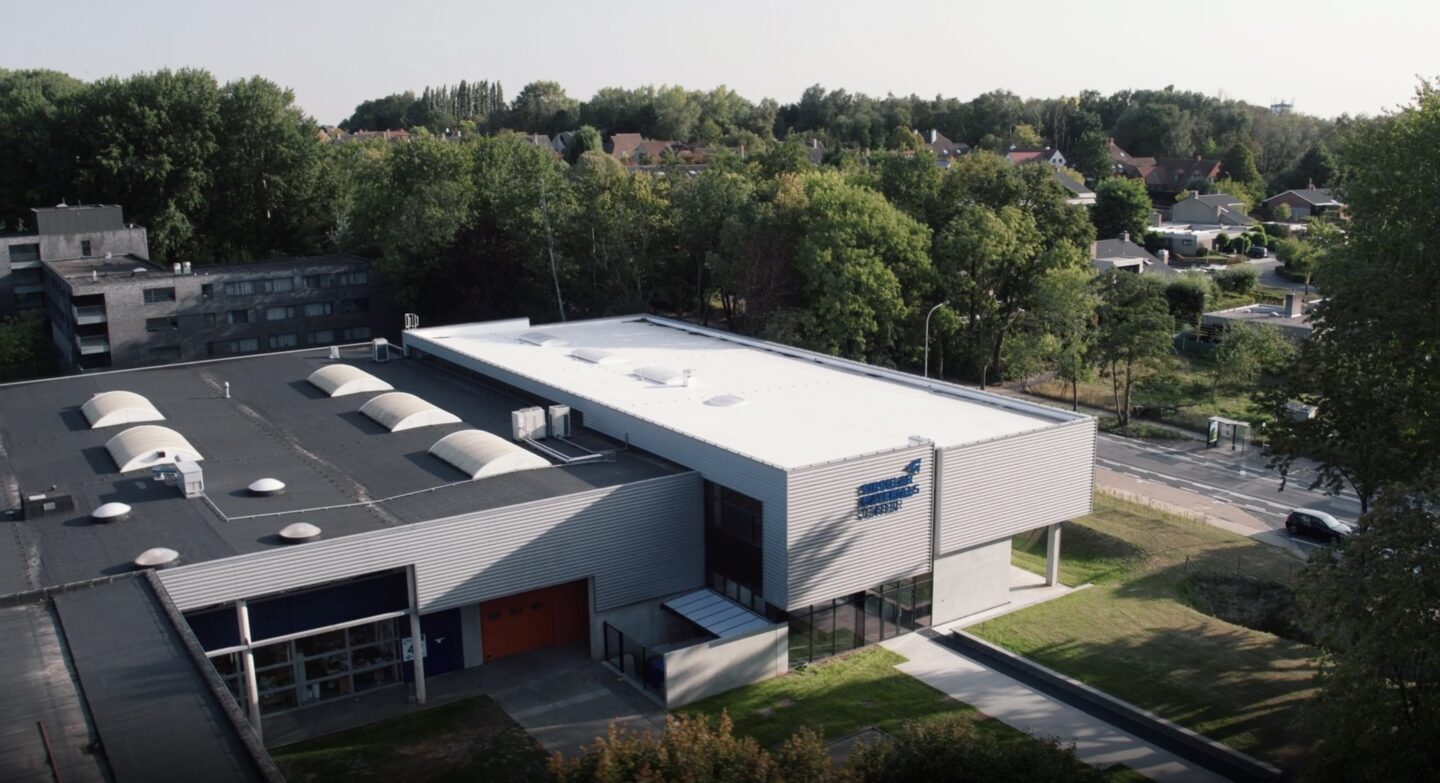
Moving a festive opening event to the virtual realm
POM West-Vlaanderen
Web experiences • 360° Photography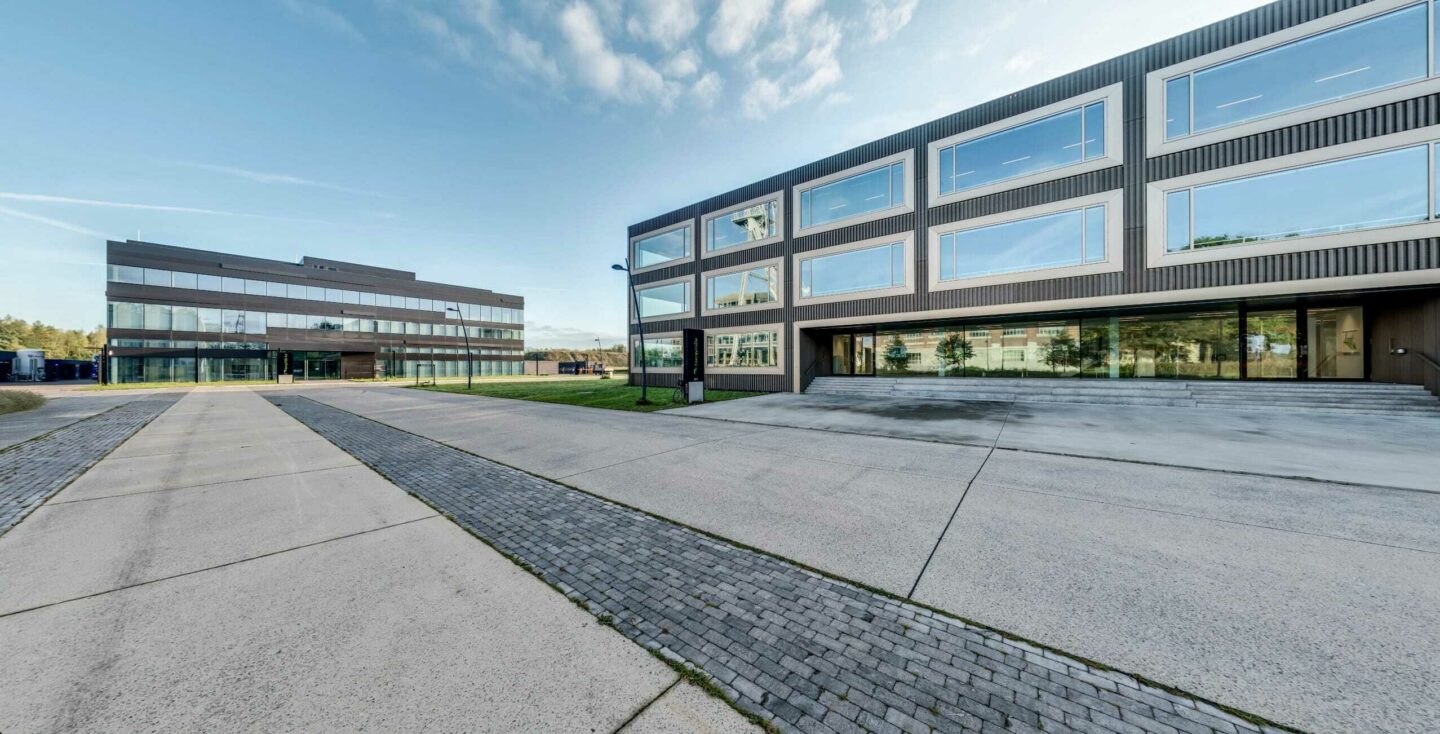
Virtual grand tour
EnergyVille
Web experiences • 360° PhotographyVirtual Mechelen: the Official Virtual Tour for the City of Mechelen
Stad Mechelen
Web experiences • Virtual reality • 360° PhotographyHighlighting urban redevelopment in virtual reality
Stad Sint-Niklaas
Web experiences • 360° Photography • 360° Video • 3DHighlighting the cultural heritage of Vlaams-Brabant, using virtual reality
Vlaams-Brabant
Web experiences • 360° PhotographyMoving a festive opening event to the virtual realm
POM West-Vlaanderen
Web experiences • 360° PhotographyVirtual grand tour
EnergyVille
Web experiences • 360° PhotographyDrag
or click