
Why a virtual tour is essential for every hospital
- 360° Photography
In a healthcare landscape that is becoming increasingly digital, the human touch sometimes risks disappearing. Yet there is one digital innovation that actually makes the patient experience more personal, warmer, and more accessible: the interactive virtual tour.
Why a virtual tour is essential for every hospital
Forget the futuristic visions of 2032. Let's look at what is needed today. In a healthcare landscape that is becoming increasingly digital, the human touch sometimes risks disappearing. Yet there is one digital innovation that actually makes the patient experience more personal, warmer, and more accessible: the interactive virtual tour.
Not a nice to have, but a must have
For hospitals, the question is no longer whether they should digitise, but how they can do so without losing sight of the patient. In 2025, a virtual tour is no longer a 'nice gadget' for the marketing department, but a strategic instrument that profoundly impacts the core processes of your healthcare institution: from patient education to facility management and HR.
From passive viewing to active experience
Let's be honest: nobody actually reads the paper admission brochure they receive at the reception desk. And even the traditional hospital website, with its static text blocks and endless menus, often falls short.
Is video the solution then? Often not. In our fast-paced society, nobody has the patience to sit through a ten-minute introductory video. Moreover, video is a passive medium: the viewer leans back and has to wait until the relevant information comes along.
A virtual tour, on the other hand, is an active medium. It gives control back to the visitor. They decide where to go, where to look around, and what to click on. This makes the medium much more popular with visitors. The numbers don't lie: thanks to this active engagement, a virtual tour is viewed up to 4x longer than a linear video or static web page.
A necessity for vulnerable groups
The greatest added value of a virtual tour lies in its inclusivity. For the average visitor, a hospital complex is often already a maze, but for specific target groups it is a source of intense stress.
- Patients with autism or dementia: For them, sensory processing and familiarity are crucial. An unfamiliar environment can lead to panic. By allowing them to digitally acclimatise to the colours, walking routes, and spaces in advance, you create predictability and calm.
- Anxiety and phobias: Consider also the large group of people with agoraphobia, social anxiety, or iatrophobia (fear of doctors). All together, this accounts for a significant proportion of your patient population. By giving them the opportunity to 'visit' the hospital from the safety of their own home, you significantly lower the threshold. The unknown becomes familiar.
People with autism, anxiety, or agoraphobia — and there are many — have a great need for virtual tours. For them, it is often essential to prepare for a hospital visit in a low-stimulus way.
Innovation in Education and Onboarding
Virtual tours go beyond just patient education; they are a powerful tool for internal training and HR. And make no mistake: this is not about expensive VR headsets that isolate you from the world, but about accessible tours for any device.
Look at how market leader Poppr successfully deploys this concept for worldwide education. Think of their impressive live virtual tours of Auschwitz for schools worldwide, or the complex safety trainings for Janssen Pharmaceutica.
The same technology enables hospitals to onboard new employees and interns more efficiently. Even before their first working day, they can familiarise themselves with the layout of the operating theatres or the safety protocols. The effect is enormous: organisations that use interactive technology for their onboarding see an improvement of no less than 78% in new employee retention. They feel at home faster and better prepared.
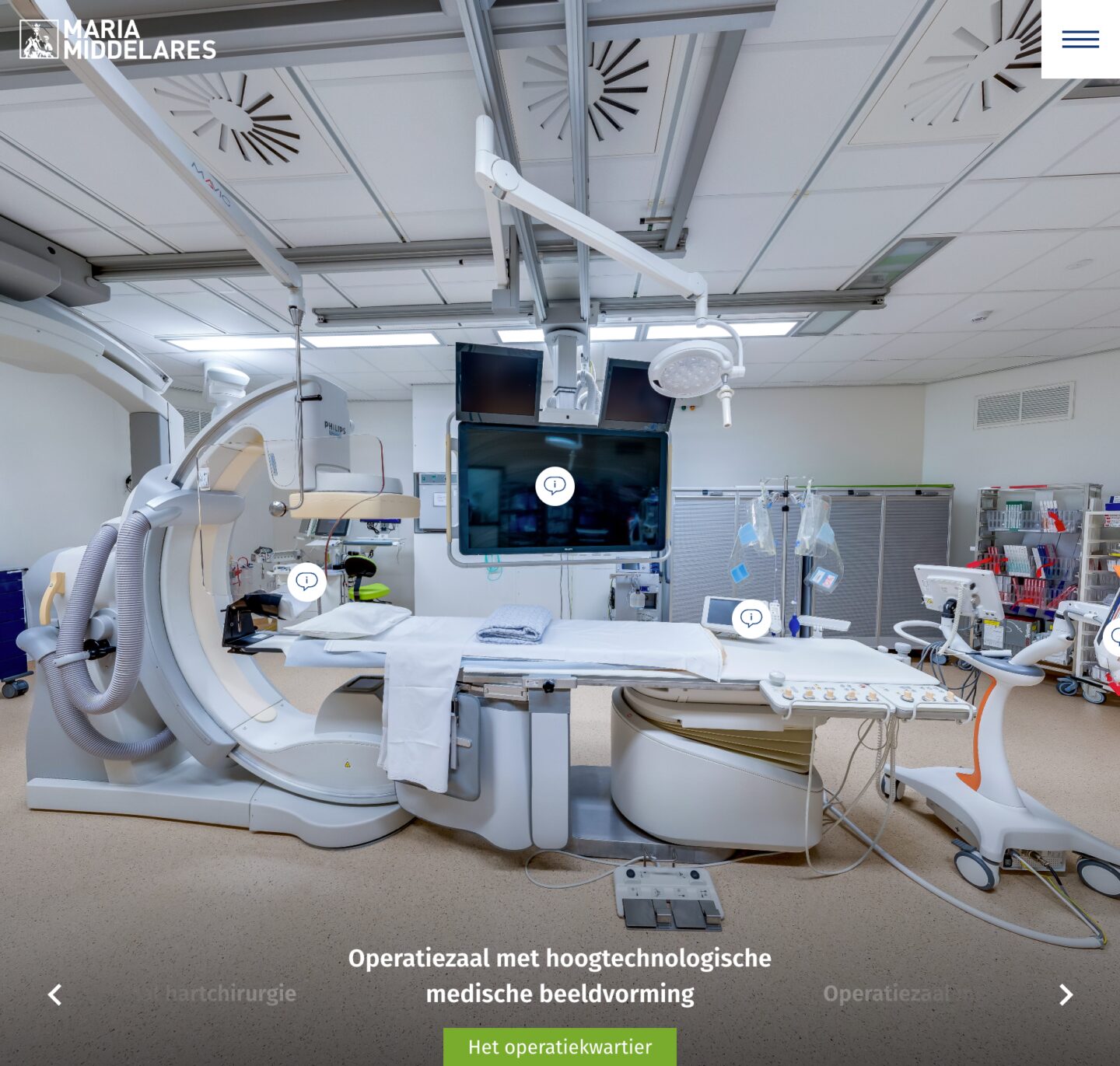
The gold standard: Maria Middelares
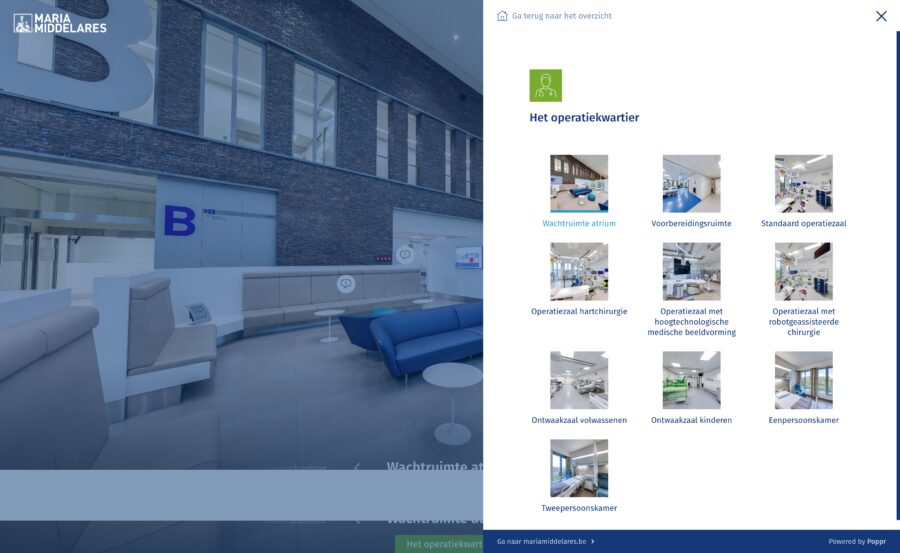
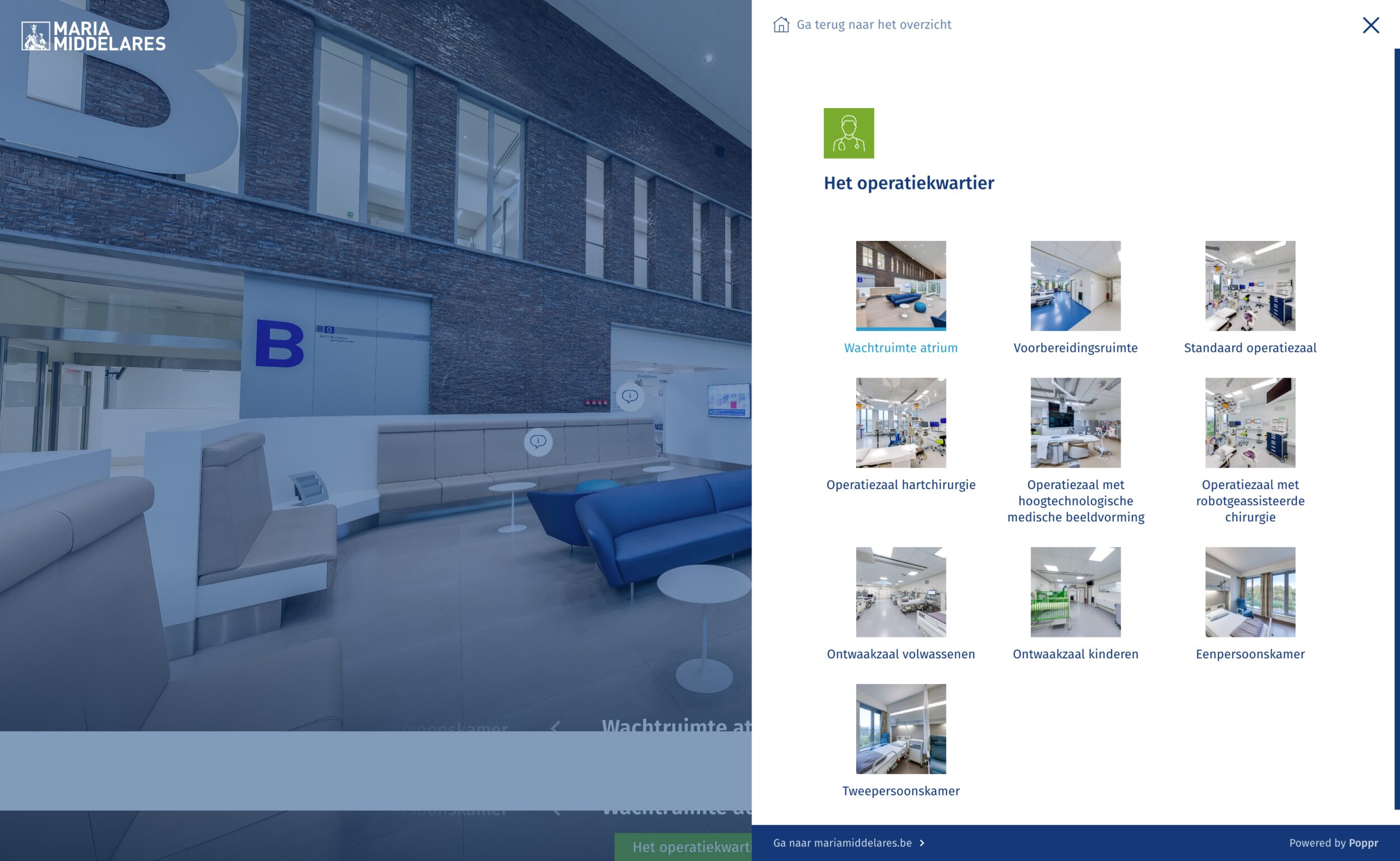
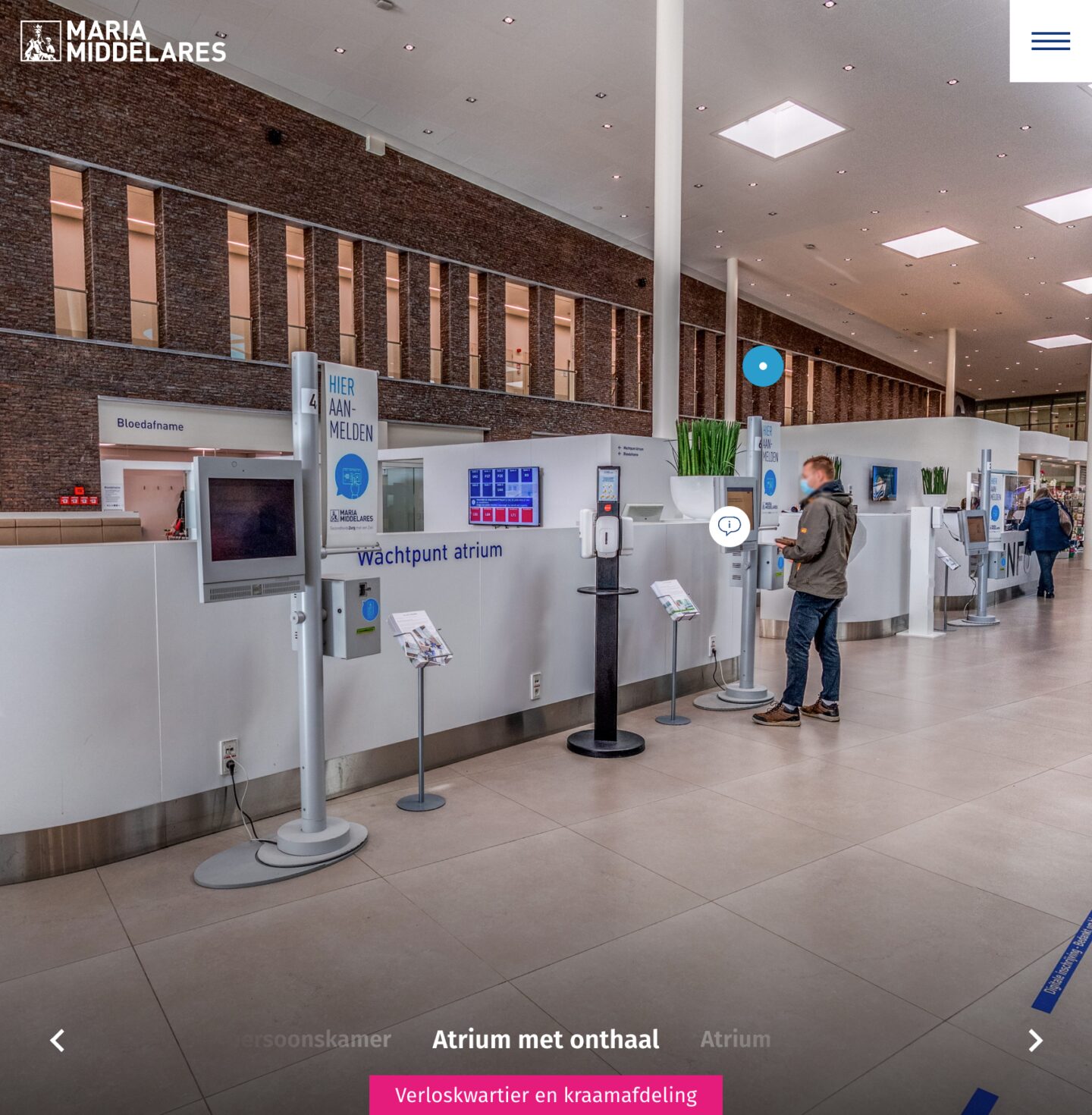
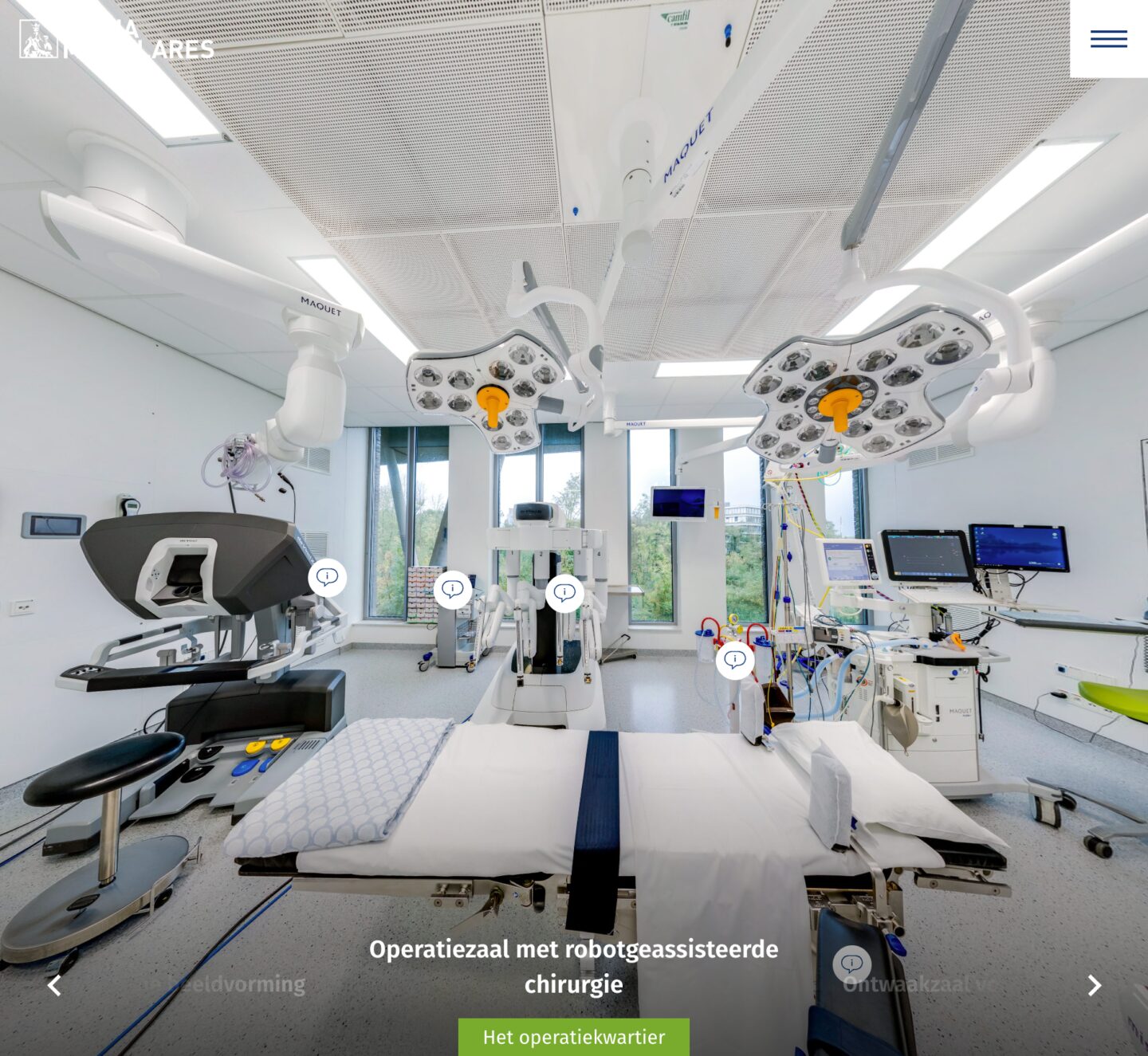
A wonderful example of how this works in practice can be seen at the Algemeen Ziekenhuis Maria Middelares in Ghent. They are setting the standard by using technology for hospitality.
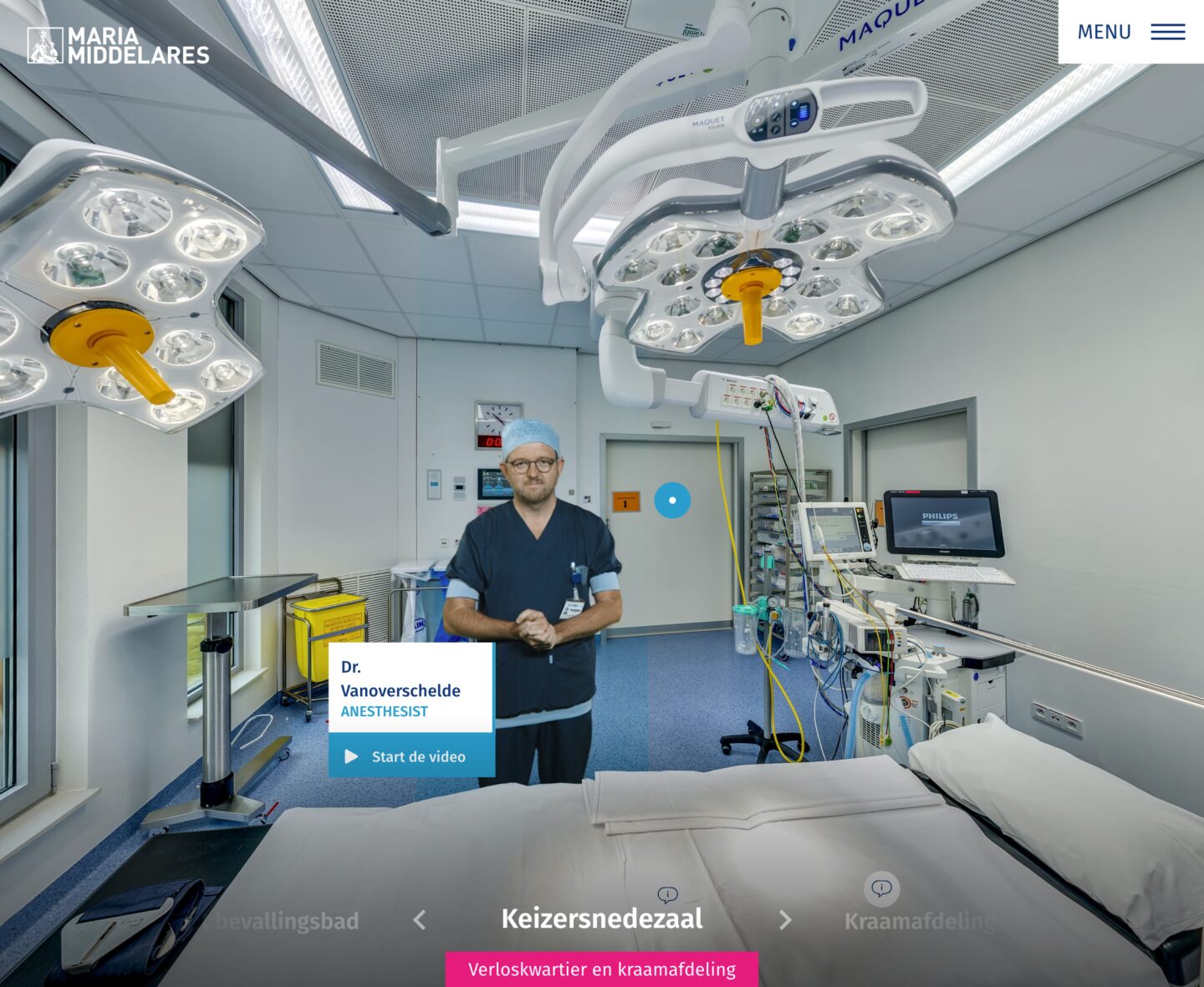
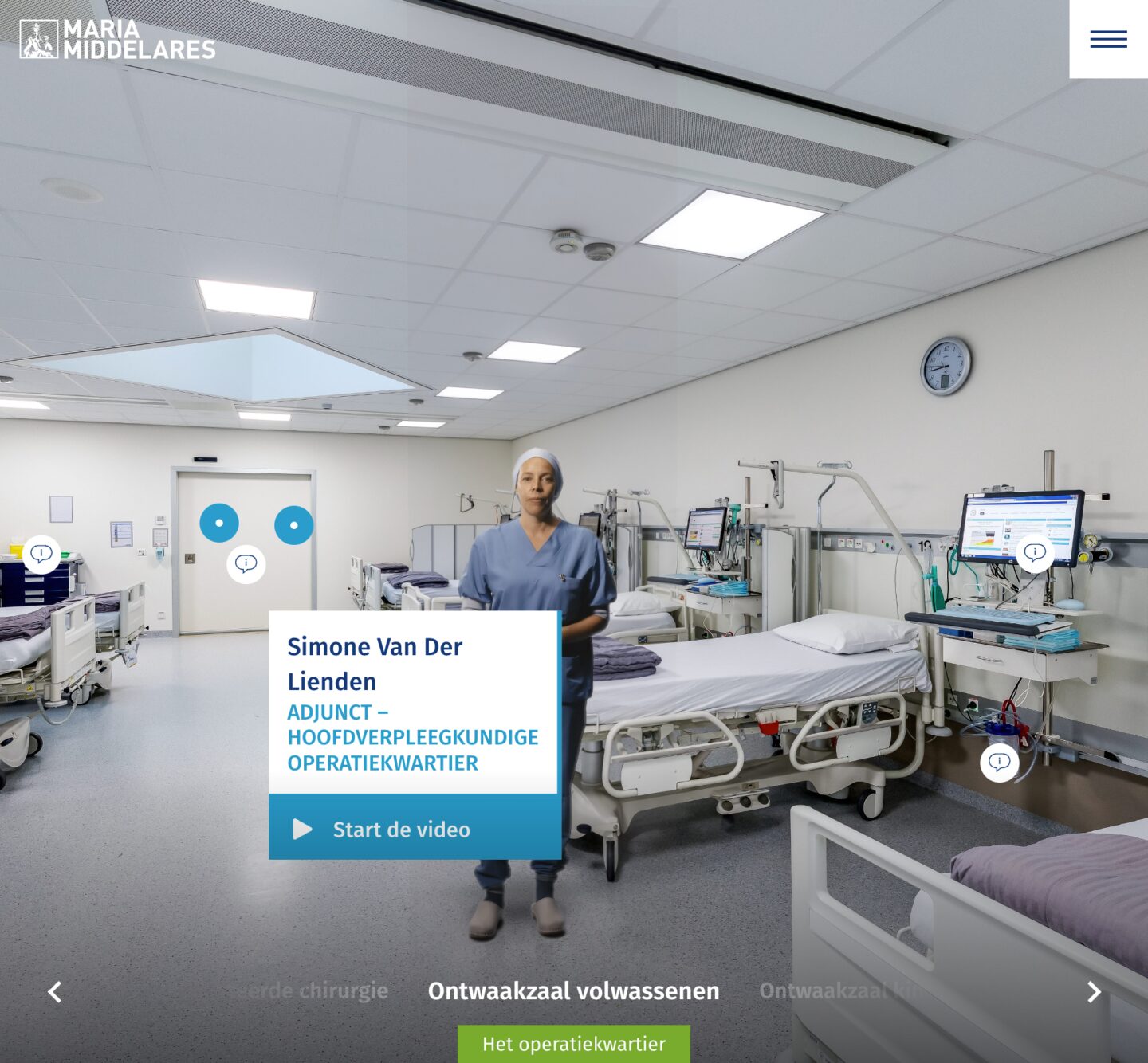
In their virtual tour, you are not just guided through an empty building; you are 'welcomed'. At strategic points, videos appear of real doctors and nurses providing explanations. Patients can see the face of the specialist who will be treating them in advance. This fits seamlessly into their vision of "Healthcare with a soul".
Not a luxury showcase
In 2025, a virtual tour is no longer a 'luxury showcase' for the homepage. It is a multifunctional platform that optimises processes and has a direct impact on patient wellbeing.
That impact can be quantified: various studies show that good virtual preparation can reduce patient anxiety before a procedure by as much as 40%.
Why is that 40% so important?
- Less stress = faster recovery: A relaxed patient often needs less pain medication.
- Calmer procedures: Less anxious patients require less intensive emotional support on the day of admission, which reduces the workload for healthcare staff.
Is your hospital ready for the next step?
Implementing a high-quality virtual tour is an investment in patient satisfaction, staff retention, and operational efficiency. It shows that your hospital understands what today's patient needs: clarity, transparency, and reassurance.
Would you like to be at the forefront of digital patient care, just like Maria Middelares?