A familiar landmark with an unfamiliar interior
Most people recognise a water tower. Far fewer know what happens inside one. For Farys, Poppr opened that world to the public through a virtual tour of three water towers in Bruges, Ghent and Asse. Visitors can step inside digitally, look around and learn more about the infrastructure behind their tap water.
The tours were created for the Flemish Water Days in March 2022. Farys wanted to open its towers to virtual visitors and introduce the public to places they would usually only see from the outside. The brief called for more than attractive photography: visitors needed clear explanations connected to the spaces they were exploring.
This was a continuation of an existing collaboration. Poppr had previously photographed Farys’s drinking water production centre in Ostend for the virtual editions of the Open Bedrijvendag event. Its combination of 360° photography and supporting information provided the starting point for the new water tower tours.
Poppr developed a website in Farys’s visual identity, with a clear starting point and a separate tour for each tower. It gave a technical subject an inviting introduction for a broad public audience.
From the street to the interior, and up into the air
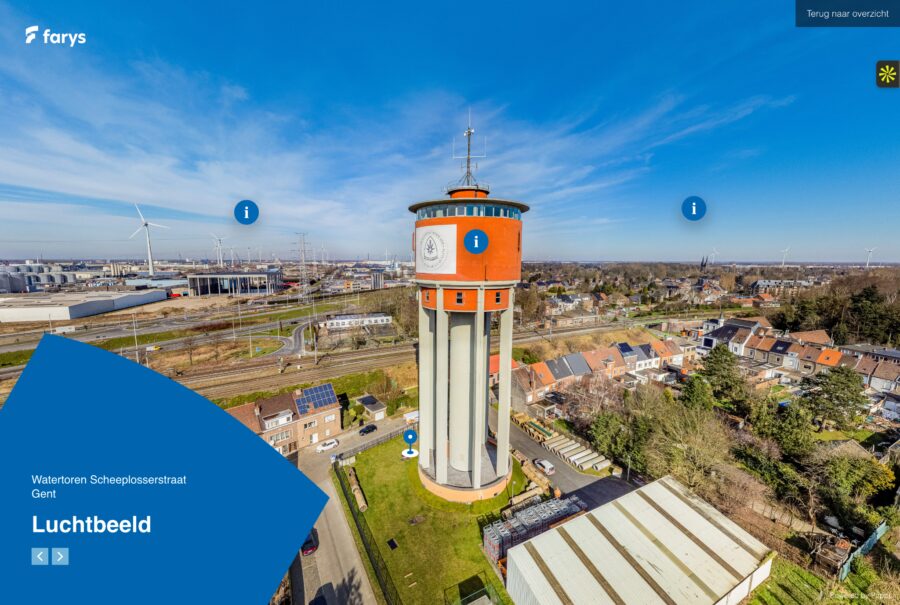
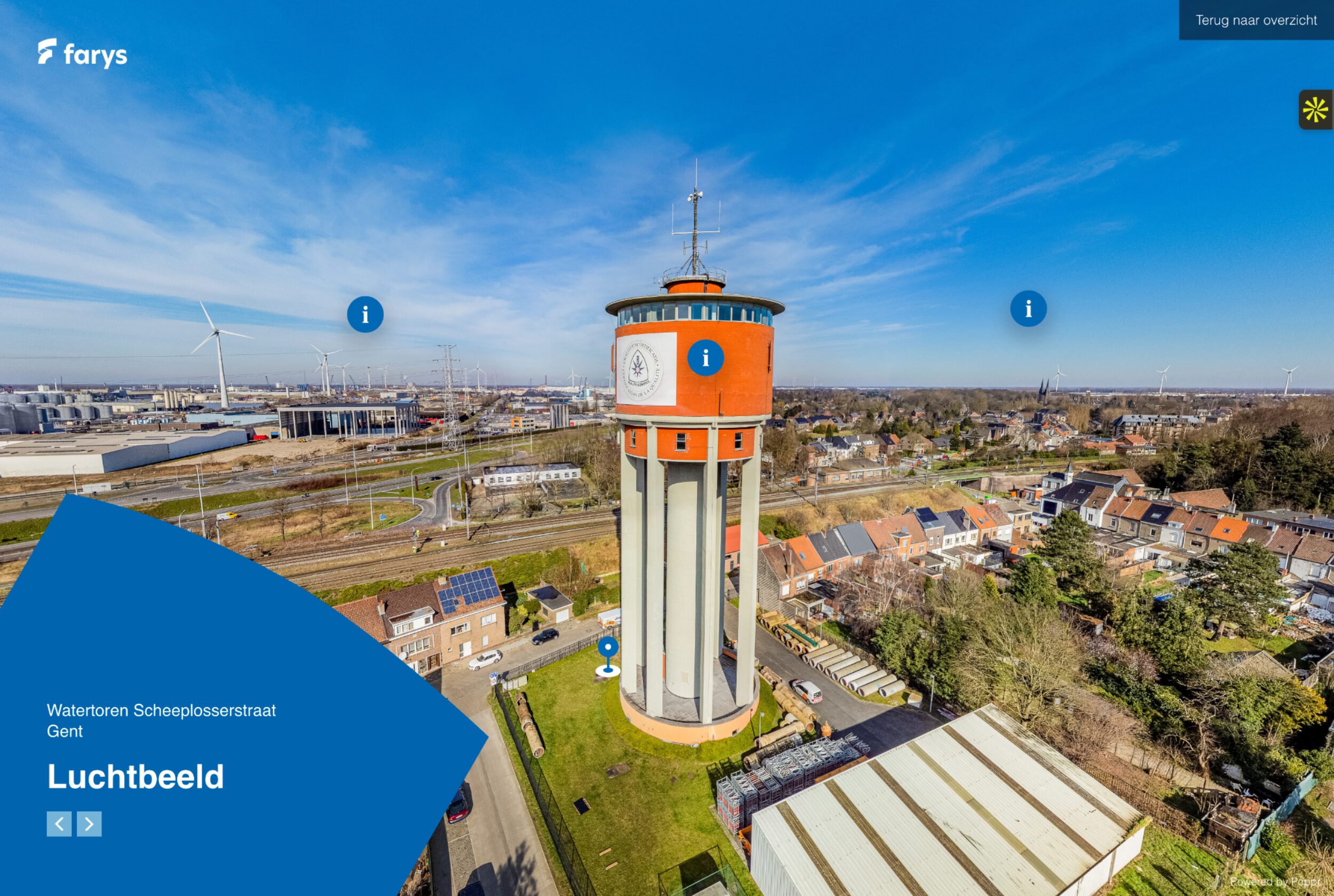
The experience brings together three distinct locations: the water tower in Sint-Kruis, Bruges; the tower on Scheeplosserstraat in Ghent; and the Boekfos water tower in Asse. Visitors choose which location to explore and where they want to spend more time.
Farys and Poppr selected views that show each tower from different perspectives. Exterior photography places the building in its surroundings. Interior panoramas reveal its spaces and installations. Aerial imagery adds views around the towers from above. Together, these perspectives connect the landmark people see from the street with the less familiar world behind its walls.
Interactive information points place explanations within the scene. Visitors can look at a feature, open a hotspot and read more about it. Text and additional photographs provide context for what they are seeing. This gives people a way into the subject without requiring prior technical knowledge.
The visitor controls the pace, while the images and information work together. They can pause to explore a room or follow their curiosity to another viewpoint. For infrastructure that many people have never entered, a virtual visit offers a practical way to look closer without being physically on site.
An experience Farys can continue to develop
A public information tool needs room for new content. Farys received access to the content management system, allowing its communications team to add and update text, photographs and information points. The people who know the infrastructure could shape the explanations themselves and keep building on the original tour.
The team used that capability while preparing the tours for launch. The experience combines a visual record of the towers with Farys’s knowledge of their operation. Further explanations can be added to the existing journey without requiring a new photography session.
For utilities and organisations managing public infrastructure, this case shows a clear application of virtual tours. A location becomes available to explore remotely, with explanations placed where they are most useful. That creates a practical starting point for public communication and educational content about buildings and installations that are unfamiliar to much of the audience.
Want to help people understand what happens inside your buildings or facilities? Discuss your virtual tour with Poppr. We start with your audience, your locations and the questions your visitors need answered, then define the experience around them.